Filter by
Effects of Probiotics, Prebiotics, and Synbiotics on Human Health
The human gastrointestinal tract is colonised by a complex ecosystem of microorganisms. Intestinal bacteria are not only commensal, but they also undergo a synbiotic co-evolution along with their host. Beneficial intestinal bacteria have numerous and important functions, e.g., they produce various nutrients for their host, prevent infections caused by intestinal pathogens, and modulate a normal…
- Edition
- -
- ISBN/ISSN
- -
- Collation
- -
- Series Title
- -
- Call Number
- -

Comparison of the Efficacy of Tenofovir Versus Tenofovir plus Entecavir in th…
- Edition
- -
- ISBN/ISSN
- -
- Collation
- -
- Series Title
- -
- Call Number
- -
- Edition
- -
- ISBN/ISSN
- -
- Collation
- -
- Series Title
- -
- Call Number
- -

Diagnosis of Hepatic Nodules in Patients at Risk for Q1 Hepatocellular Carcin…
Unequivocal diagnosis with avoidance of false- positive results is very relevant in patients with liver disease in whom an imaging technique detects a nodule that raises the potential emergence of hepatocellular carcinoma (HCC). Although biopsy confirmation is standard in most cancers, several studies have shown that reliable HCC diagnosis may be established by imaging techniques in patient…
- Edition
- -
- ISBN/ISSN
- -
- Collation
- -
- Series Title
- -
- Call Number
- -
Etiology of Peptic Ulcer Disease
Peptic ulcer (PU) is defect in the gastrointestinal mucosa usually located in the stomach and duodenum, but it can develop in any portion of the gastrointestinal tract that is exposed to acid and pepsin in sufficient concentration and duration. Histologically, ulcers are defined as necrotic mucosal defects that extend through the muscularis mucosa and into submucosa, whereas superficial necrot…
- Edition
- -
- ISBN/ISSN
- -
- Collation
- -
- Series Title
- -
- Call Number
- -

Evidence-based clinical practice guidelines for peptic ulcer disease 2015
The Japanese Society of Gastroenterology (JSGE) revised the evidence-based clinical practice guidelines for peptic ulcer disease in 2014 and has created an English version. The revised guidelines consist of seven items: bleeding gastric and duodenal ulcers, Helicobacter pylori (H. pylori) eradication therapy, non-eradication therapy, drug-induced ulcer, non-H. pylori, non-nonsteroidal anti-inf…
- Edition
- -
- ISBN/ISSN
- -
- Collation
- -
- Series Title
- -
- Call Number
- -
Peptic ulcer disease
The rapidly declining prevalence of Helicobacter pylori infection and widespread use of potent anti-secretory drugs means peptic ulcer disease has become substantially less prevalent than it was two decades ago. Management has, however, become more challenging than ever because of the threat of increasing antimicrobial resistance worldwide and widespread use of complex anti-thrombotic therapy i…
- Edition
- -
- ISBN/ISSN
- -
- Collation
- -
- Series Title
- -
- Call Number
- -

Clinical Application of Stem Cells in Liver Diseases: From Bench to Bedside
Advances in stem cell biology bring remarkable revolution to human disease study and therapy, including various liver diseases. The establishment of pluripotent stem cells (PSCs), especially induced pluripotent stem cells (iPSCs), makes it possible to obtain infinite hepatocytes derived from human source for cell therapy, disease modeling, and drug testing
- Edition
- -
- ISBN/ISSN
- -
- Collation
- -
- Series Title
- -
- Call Number
- -
THE RADIOLOGICAL FINDINGS IN RADIATION-INDUCED ENTERITIS AND COLITIS A REVIEW…
Following radiotherapy to the abdomen, clinically significant radiation damage may occur to the gastrointestinal tract. The disease process when observed directly (as at surgery or at autopsy) may extend far more than that seen on the radiological examination. One radiological finding is a roundish pool of barium due to many loops of small bowel being matted together and encased in a thick,…
- Edition
- -
- ISBN/ISSN
- -
- Collation
- -
- Series Title
- -
- Call Number
- -
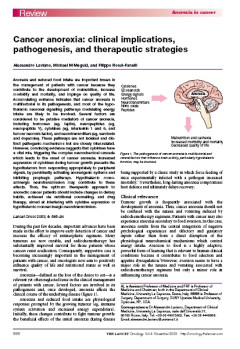
Cancer anorexia: clinical implications, pathogenesis, and therapeutic strategies
Anorexia and reduced food intake are important issues in the management of patients with cancer because they contribute to the development of malnutrition, increase morbidity and mortality, and impinge on quality of life.
- Edition
- -
- ISBN/ISSN
- -
- Collation
- -
- Series Title
- -
- Call Number
- -
Brief Review on the Causes, Diagnosis and Therapeutic Treatment of Gastritis …
Gastritis represent a state of inflammation, irritation, or erosion of the stomach lining which may occur suddenly (acute) or gradually (chronic). Generally there is no universally accepted classification of gastritis and early classification was based mainly on the morphology, but recently pathogenic mechanisms have also been incorporated. The gastric mucosa is continuously exposed to many nox…
- Edition
- -
- ISBN/ISSN
- -
- Collation
- -
- Series Title
- -
- Call Number
- -
 Computer Science, Information & General Works
  Philosophy & Psychology
  Religion
  Social Sciences
  Language
  Pure Science
  Applied Sciences
  Art & Recreation
  Literature
  History & Geography