Filter by

Comparative nasal airflow with loratadine-pseudoephedrine and fluticasone nas…
Although it is known that oral antihistamine-pseudoephedrine combination tablets have a faster onset than intranasal corticosteroid sprays in the treatment of allergic rhinitis after the first dose, the magnitude of change has not been measured in a comparative manner. Furthermore, the sensation of sprayed liquid in the nose may lead patients to mistakenly believe that intranasal steroid sprays…
- Edition
- -
- ISBN/ISSN
- -
- Collation
- -
- Series Title
- -
- Call Number
- -
Preparation of delayed-release multiparticulate formulations of diclofenac so…
Diclofenac sodium was used as a model drug for preparation of delayed-release (DR) multiparticulates, which were further processed into solid oral dosage forms such as capsules and tablets. Multiple unit pellets systems (MUPS) were prepared from different types of starter pellets (inert cores) including microcrystalline cellulose pellets, sugar spheres, isomalt pellets and novel calcium phospha…
- Edition
- -
- ISBN/ISSN
- -
- Collation
- -
- Series Title
- -
- Call Number
- -
Oral Modified Release Multiple-Unit Particulate Systems: Compressed Pellets, …
Oral modified-release multiparticulate dosage forms, which are also referred to as oral multiple-unit particulate systems, are becoming increasingly popular for oral drug delivery applications. The compaction of polymer-coated multiparticulates into tablets to produce a sustained-release dosage form is preferred over hard gelatin capsules. Moreover, multiparticulate tablets are a promising solu…
- Edition
- -
- ISBN/ISSN
- -
- Collation
- -
- Series Title
- -
- Call Number
- -
SERPINA1 Gene Variants in Granulomatosis with Polyangiitis
Alpha-1 antitrypsin (A1AT) deficiency is one of the most common genetic disorders in Caucasian population. There is a link between granulomatosis with polyangiitis (GPA) and most frequent variants of SERPINA1 gene encoding severe alpha-1 antitripsin deficiency
- Edition
- -
- ISBN/ISSN
- -
- Collation
- -
- Series Title
- -
- Call Number
- -
SERPINA1 mRNA as a Treatment for Alpha-1 Antitrypsin Deficiency
Alpha-1-antitrypsin (AAT) deficiency is a genetic disorder that produces inactive/defective AAT due tomutations in the SERPINA1 gene encoding AAT. This disease is associated with decreased activity of AAT in the lungs and deposition of excessive defective AAT protein in the liver. Currently there is no specific treatment for liver disease associated with AAT deficiency. AAT lung disease is o…
- Edition
- -
- ISBN/ISSN
- -
- Collation
- -
- Series Title
- -
- Call Number
- -
Chronic Cough and Gastroesophageal Reflux in Children: CHEST Guideline and E…
Whether gastroesophageal reflux (GER) or GER disease (GERD) causes chronic cough in children is controversial. Using the Population, Intervention, Comparison, Outcome (PICO) format, we undertook four systematic reviews. For children with chronic cough (> 4-weeks duration) and without underlying lung disease: (1) who do not have gastrointestinal GER symptoms, should empirical treatment for GERD …
- Edition
- -
- ISBN/ISSN
- -
- Collation
- -
- Series Title
- -
- Call Number
- -
BSACI guideline for the diagnosis and management of allergic and non-allergic…
This is an updated guideline for the diagnosis and management of allergic and non-allergic rhinitis, first published in 2007. It was produced by the Standards of CareCommittee of the British Society of Allergy and Clinical Immunology, using accre-dited methods. Allergic rhinitis is common and affects 10–15% of children and 26%of adults in the UK, it affects quality of life, school and work at…
- Edition
- -
- ISBN/ISSN
- -
- Collation
- -
- Series Title
- -
- Call Number
- -

The Clinical Pharmacology of Non-sedating Antihistamines
We previously reported on brain H1 receptor occupancy measurements of antihistamines in human brain using [11C]doxepin and positron emission tomography (PET). We proposed the use of brain H1 receptor occupancy to classify antihistamines objectively into three categories of sedating, less-sedating, and non-sedating antihistamines according to their sedative effects. Non-sedating antihistamines a…
- Edition
- -
- ISBN/ISSN
- -
- Collation
- -
- Series Title
- -
- Call Number
- -

Efficacy and safety of loratadine plus pseudoephedrine in patients with seaso…
Antihistamines have been shown to have a varietyrnof therapeutic effects in asthma. Although nasal obstructionrnmay play an important role in modulating lower airwayrnfunction, no prior trial has used a decongestant in combinationrnwith an antihistamine in patients with allergic rhinitisrnand concomitant asthma.
- Edition
- -
- ISBN/ISSN
- -
- Collation
- -
- Series Title
- -
- Call Number
- -
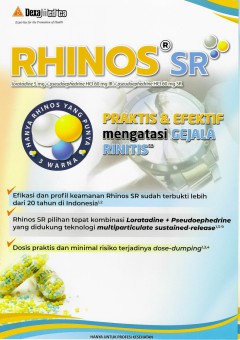
The efficacy of Rhinos® SR on nasal resistance and nasal symptoms in patient…
Rhinos® SR is a fixed combination of 5 mg loratadine and 60 mg pseudoephedrine immediate release and 60 mg pseudoephedrine sustained release. The present study was aimed to assess the efficacy of Rhinos® SR on nasal airway resistance (NAR) objectively using rhinomanometer and on nasal symptoms in patients with perennial allergic rhinitis (PAR) in a tropical country. This was a randomized, dou…
- Edition
- -
- ISBN/ISSN
- -
- Collation
- -
- Series Title
- -
- Call Number
- -
 Computer Science, Information & General Works
  Philosophy & Psychology
  Religion
  Social Sciences
  Language
  Pure Science
  Applied Sciences
  Art & Recreation
  Literature
  History & Geography