Filter by
Acute Myeloid Leukemia
Acute myeloid leukemia (AML) is a form of cancer that is characterized by infiltration of the bone marrow, blood, and other tissues by proliferative, clonal, abnormally differentiated, and occasionally poorly differentiated cells of the hematopoietic system. Although it was incurable 50 years ago, AML is now cured in 35 to 40% of adult patients who are 60 years of age or younger and in 5 to 15…
- Edition
- -
- ISBN/ISSN
- -
- Collation
- -
- Series Title
- -
- Call Number
- -
Nasopharyngeal carcinoma in children and adolescents - a single institution e…
Most childhood and adolescence nasopharyngeal carcinoma patients were locally advanced diseases at first diagnosed. The treatment results of radiotherapy, with or without chemotherapy, are excellent in our institution. Reducing distant metastasis with new strategies and late toxicities with intensity-modulated radiotherapy are the future directions for the treatment of adolescent nasopharyng…
- Edition
- -
- ISBN/ISSN
- -
- Collation
- -
- Series Title
- -
- Call Number
- -
Diagnosis and Treatment of Nasopharyngeal Carcinoma in Children and Adolescen…
Nasopharyngeal carcinoma (NPC) is a rare malignant tumor arising from epithelial cells of the nasopharynx. Its incidence is highest in Southeast Asia. Age distribution of NPC is bimodal, with one peak in young adolescents and another in patients 55–59 years of age
- Edition
- -
- ISBN/ISSN
- -
- Collation
- -
- Series Title
- -
- Call Number
- -

Head and neck cancer: causes, prevention and treatment
Alcohol and tobacco are still atop risk factors. Other factors may influence the development of head and neck carcinoma. Surgery is the main treatment option, and the addition of radiotherapy following surgery is frequent for patients in the early stages of the disease. Other therapies target specific genetic molecular components connected to tumor development. Disease preventive measures inclu…
- Edition
- -
- ISBN/ISSN
- -
- Collation
- -
- Series Title
- -
- Call Number
- -
Head and neck cancer: improving outcomes with a multidisciplinary approach
For early-stage head and neck cancer (HNC), surgery (S) or radiotherapy (RT) is a standard treatment. The multidisciplinary approach, which includes multimodality treatment with S followed by RT, with or without chemotherapy (CT) or concurrent chemoradiotherapy (CRT), is required for locally advanced head and neck cancer (LAHNC). CRT improves prognosis, locoregional control (LRC), and organ fu…
- Edition
- -
- ISBN/ISSN
- -
- Collation
- -
- Series Title
- -
- Call Number
- -
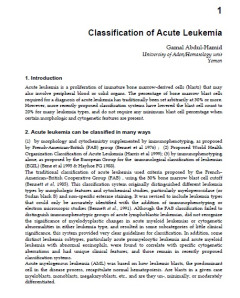
Classification of Acute Leukemia
Acute leukemia is a proliferation of immature bone marrow-derived cells (blasts) that may also involve peripheral blood or solid organs. The percentage of bone marrow blast cells required for a diagnosis of acute leukemia has traditionally been set arbitrarily at 30% or more. However, more recently proposed classification systems have lowered the blast cell count to 20% for many leukemia types,…
- Edition
- -
- ISBN/ISSN
- -
- Collation
- -
- Series Title
- -
- Call Number
- -

Thiamphenicol Induced Bone Marrow Suppression as a Therapy of Myeloproferativ…
Sixteen patients, suffering from myeloproliferative diseases (9 polycythaemia vera, 7 primary thrombocythaemia) and 20 control subjects were treated for 14 days with 1 g of thiamphenicol per day. The effect of 40 treatment cycles was studied. The regimen resulted in lowering the haemoglobin values by 4.8070 in controls (p >_ 0.001) and patients (p >_ 0.01); the reticulocyte count dropped 43 °7…
- Edition
- -
- ISBN/ISSN
- -
- Collation
- -
- Series Title
- -
- Call Number
- -
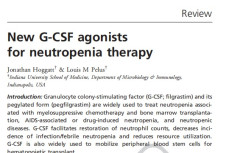
New G-CSF agonists for neutropenia therapy
Granulocyte colony-stimulating factor (G-CSF; filgrastim) and its pegylated form (pegfilgrastim) are widely used to treat neutropenia associated with myelosuppressive chemotherapy and bone marrow transplantation, AIDS-associated or drug-induced neutropenia, and neutropenic diseases. G-CSF facilitates restoration of neutrophil counts, decreases incidence of infection/febrile neutropenia and redu…
- Edition
- -
- ISBN/ISSN
- -
- Collation
- -
- Series Title
- -
- Call Number
- -
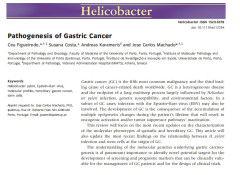
Pathogenesis of Gastric Cancer
Gastric cancer (GC) is the fifth most common malignancy and the third leading cause of cancer-related death worldwide. GC is a heterogeneous disease and the endpoint of a long multistep process largely influenced by Helicobacter pylori infection, genetic susceptibility, and environmental factors. In a subset of GC cases, infection with the Epstein–Barr virus (EBV) may also be involved. The d…
- Edition
- -
- ISBN/ISSN
- -
- Collation
- -
- Series Title
- -
- Call Number
- -
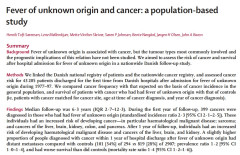
Fever of unknown origin and cancer: a population-based study
Fever of unknown origin is associated with cancer, but the tumour types most commonly involved and the prognostic implications of this relation have not been studied. We aimed to assess the risk of cancer and survival after hospital admission for fever of unknown origin in a nationwide Danish follow-up study
- Edition
- -
- ISBN/ISSN
- -
- Collation
- -
- Series Title
- -
- Call Number
- -
 Computer Science, Information & General Works
  Philosophy & Psychology
  Religion
  Social Sciences
  Language
  Pure Science
  Applied Sciences
  Art & Recreation
  Literature
  History & Geography