Filter by
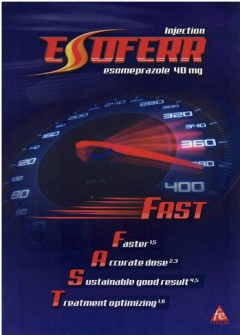
Pharmacokinetics of Esomeprazole in Critically Ill Patients
Esomeprazole, a potent proton pump inhibitor (PPI), is widely used for the prevention of stress ulcers in intensive care unit (ICU) patients.
- Edition
- -
- ISBN/ISSN
- -
- Collation
- -
- Series Title
- -
- Call Number
- -
Study on the preventive effect of intravenous esomeprazole in the management …
This retrospective study investigated the preventive effect of intravenous esomeprazole (IVEO) in the prevention of nonvarices upper gastrointestinal bleeding (NUGIB). This study enrolled 130 patients with NUGIB and all of them underwent successful endoscopic hemostasis, of which 65 cases received routine management and IVEO (Group A) and the other 65 cases received routine management alone (G…
- Edition
- -
- ISBN/ISSN
- -
- Collation
- -
- Series Title
- -
- Call Number
- -
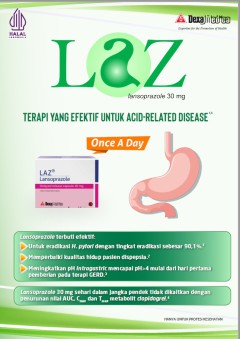
Eradication Rates for Esomeprazole and Lansoprazole-Based 7-Day Non-Bismuth C…
The eradication rates between esomeprazole and lansoprazole-based nonbismuth concomitant quadruple therapy for first-line H. pylori treatment were similar in this study. Both could achieve a > 90% report card in the PP analysis
- Edition
- -
- ISBN/ISSN
- -
- Collation
- -
- Series Title
- -
- Call Number
- -
EFFECTIVENESS OMEPRAZOLE AND LANSOPRAZOLE IN DYSPEPSIA PATIENT WITH NEPEAN DY…
In patients with dyspepsia, a common initial management strategy in primary care is to prescribe a course of empiric antisecretory therapy. Lansoprazole and omeprazole as antisecretory agents have been proven effective for treatment of dyspepsia. This study was aimed is to compare the effect of Omeprazole (1 x 20 mg) and Lansoprazole (1x 30 mg) to ambulatory dyspepsia patient by using questionn…
- Edition
- -
- ISBN/ISSN
- -
- Collation
- -
- Series Title
- -
- Call Number
- -

Omeprazole: Effective, Convenient Therapy for Zollinger-Ellison Syndrome
The acute and long-term effects of omeprazole on gastric acid secretion were examined in 11 patients with Zollinger-Ellison syndrome. Basal gastric acid secretion was inhibited by 50% 3 h after a single 60-mg dose of omeprazole and 78% 4 h after administration of omeprazole. Patients were treated with a single daily dose of omeprazole, and the dose requirement was defined as the lowest dose of…
- Edition
- -
- ISBN/ISSN
- -
- Collation
- -
- Series Title
- -
- Call Number
- -

Safety assessment of omeprazole use: a review
Risks regarding hospital admission due to adverse drug reactions and drug interactions from use of omeprazole have been reported. The question guiding the present review was “Which adverse events occur in patients using omeprazole in a Food and Drug Administration-approved and/or off-label manner?” It was also proposed to evaluate the safety of use of omeprazole
- Edition
- -
- ISBN/ISSN
- -
- Collation
- -
- Series Title
- -
- Call Number
- -
Comparative study of omeprazole, lansoprazole, pantoprazole and esomeprazole …
To clarify whether there is any difference in the symptom relief in patients with reflux esophagitis following the administration of four Proton pump inhibitors (PPIs).
- Edition
- -
- ISBN/ISSN
- -
- Collation
- -
- Series Title
- -
- Call Number
- -
Comparative study of safety and efficacy of omeprazole, lansoprazole, and rab…
Triple therapy which includes a proton pump inhibitor (PPI) along with two antimicrobials is routinely used for the eradication of Helicobacter pylori. Multiple regimens are reported using different combinations of PPIs and antimicrobials
- Edition
- -
- ISBN/ISSN
- -
- Collation
- -
- Series Title
- -
- Call Number
- -
 Computer Science, Information & General Works
  Philosophy & Psychology
  Religion
  Social Sciences
  Language
  Pure Science
  Applied Sciences
  Art & Recreation
  Literature
  History & Geography