Filter by

Clinical Application of Stem Cells in Liver Diseases: From Bench to Bedside
Advances in stem cell biology bring remarkable revolution to human disease study and therapy, including various liver diseases. The establishment of pluripotent stem cells (PSCs), especially induced pluripotent stem cells (iPSCs), makes it possible to obtain infinite hepatocytes derived from human source for cell therapy, disease modeling, and drug testing
- Edition
- -
- ISBN/ISSN
- -
- Collation
- -
- Series Title
- -
- Call Number
- -
Diagnosis of Hepatic Nodules in Patients at Risk for Q1 Hepatocellular Carcin…
Unequivocal diagnosis with avoidance of falsepositive results is very relevant in patients with liver disease in whom an imaging technique detects a nodule that raises the potential emergence of hepatocellular carcinoma (HCC). Although biopsy confirmation is standard in most cancers, several studies have shown that reliable HCC diagnosis may be established by imaging techniques in patients wit…
- Edition
- -
- ISBN/ISSN
- -
- Collation
- -
- Series Title
- -
- Call Number
- -
Serum IL-21 levels associated with chronic hepatitis B and hepatitis B-relate…
The aim of the present study was to investigate the role of interleukin (IL)-21 in chronic hepatitis B virus (HBV) infection. IL-21 stimulates T and B cell responses and plays a role in the control of chronic viral infections. Serum IL-21 levels were measured by enzyme immunoassay in 109 patients with chronic HBV infection at various clinical stages, as well as in 19 healthy controls (HCs).
- Edition
- -
- ISBN/ISSN
- -
- Collation
- -
- Series Title
- -
- Call Number
- -
Interleukin-21 gene polymorphisms and chronic hepatitis B infection in a Chin…
In this case-control study, 366 Chinese HBV-infected patients were recruited and divided into hepatocellular carcinoma (HCC; n = 94) and non-HCC (n = 272) groups at The First Affiliated Hospital of Sun Yat-Sen University, from April 2009 to December 2012. In the non-HCC group, the patients were classified into three clinical subsets, 76 patients had chronic hepatitis B, 101 were HBV carriers a…
- Edition
- -
- ISBN/ISSN
- -
- Collation
- -
- Series Title
- -
- Call Number
- -
Hepatitis B virus persistence in mice reveals IL-21 and IL-33 as regulators o…
Hepatitis B virus (HBV) generally causes self-limiting infection in immunocompetent adults, but establishes chronic infection in some adults and in most maternally infected infants. Factors determining clearance versus persistence are not fully understood. Hydrodynamic injection (HDI) of HBV replicon plasmid via tail vein generally results in quick clearance in immunocompetent adult mice. Here,…
- Edition
- -
- ISBN/ISSN
- -
- Collation
- -
- Series Title
- -
- Call Number
- -
Granulocyte colony-stimulating factor and autologous CD133-positive stem-cell…
Results of small-scale studies have suggested that stem-cell therapy is safe and effective in patients with liver cirrhosis, but no adequately powered randomised controlled trials have been done. We assessed the safety and efficacy of granulocyte colony-stimulating factor (G-CSF) and haemopoietic stem-cell infusions in patients with liver cirrhosis.
- Edition
- -
- ISBN/ISSN
- -
- Collation
- -
- Series Title
- -
- Call Number
- -
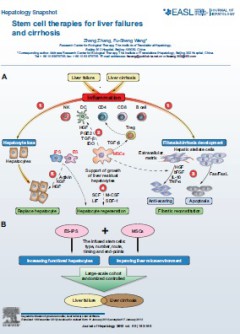
Stem cell therapies for liver failures and cirrhosis
Liver failure and cirrhosis occur as a result of a variety of chronic hepatic injuries. They display sequential and overlapping severe pathogenic processes that include severe inflammation, hepatocyte necrosis, and fibrosis/cirrhosis, and carry a high mortality rate
- Edition
- -
- ISBN/ISSN
- -
- Collation
- -
- Series Title
- -
- Call Number
- -
Idiopathic Noncirrhotic Portal Hypertension
Cirrhosis is the most common cause of portal hypertension but a heterogeneous group of clinical entities, collectively referred to as non-cirrhotic portal hypertension (NCPH), can also lead to elevation of the portal venous pressure in the absence of cirrhosis. Common causes of NCPH are nonalcoholic or alcoholic steatohepatitis, primary biliary cholangitis, primary sclerosing cholangitis, conge…
- Edition
- -
- ISBN/ISSN
- -
- Collation
- -
- Series Title
- -
- Call Number
- -
Efficacy of L-ornithine-L-aspartate as an adjuvant therapy in cirrhotic patie…
Hepatic encephalopathy is characterized by the development of impaired central nervous system function that may range from trivial abnormalities of consciousness, personality, behaviour and/or intellectual function to deep coma. Hepatic encephalopathy may be clinically invisible, i.e. minimal or sub-clinical, a syndrome that can only be detected by the demonstration of subtle psychometric or …
- Edition
- -
- ISBN/ISSN
- -
- Collation
- -
- Series Title
- -
- Call Number
- -
L-Ornithine-L-Aspartate Infusion Efficacy in Hepatic Encephalopathy
Both treatment groups were comparable regarding age, gender, etiology of cirrhosis, Child-Pugh class, mental state grade and blood ammonia at baseline. Although, improvement occurred in both groups, there was a greater improvement in L-ornithine-L-aspartate group with regard to both variables. Four patients in the placebo group and 2 in L-ornithine-L-aspartate group died.
- Edition
- -
- ISBN/ISSN
- -
- Collation
- -
- Series Title
- -
- Call Number
- -
 Computer Science, Information & General Works
  Philosophy & Psychology
  Religion
  Social Sciences
  Language
  Pure Science
  Applied Sciences
  Art & Recreation
  Literature
  History & Geography