Filter by
High-Dose Cholecalciferol Booster Therapy is Associated with a Reduced Risk o…
The worldwide pandemic of 2019 novel coronavirus disease (COVID-19) has posed the most substantial and severe public health issue for several generations, and therapeutic options have not yet been optimised. Vitamin D (in its “parent” form, cholecalciferol) has been proposed in the pharmacological management of COVID-19 by various sources. We aimed to determine whether COVID-19 mortality wa…
- Edition
- -
- ISBN/ISSN
- -
- Collation
- -
- Series Title
- -
- Call Number
- -
Effectiveness of In-Hospital Cholecalciferol Use on Clinical Outcomes in Como…
Little information is available on the beneficial effects of cholecalciferol treatment in comorbid patients hospitalized for COVID-19. The aim of this study was to retrospectively examine the clinical outcome of patients receiving in-hospital high-dose bolus cholecalciferol. Patients with a positive diagnosis of SARS-CoV-2 and overt COVID-19, hospitalized from 15 March to 20 April 2020, were co…
- Edition
- -
- ISBN/ISSN
- -
- Collation
- -
- Series Title
- -
- Call Number
- -
Association of Vitamin D Status and Other Clinical Characteristics With COVID…
Vitamin D treatment has been found to decrease the incidence of viral respiratory tract infection, especially in patients with vitamin D deficiency. Whether vitamin D is associated with coronavirus disease 2019 (COVID-19) incidence is unknown
- Edition
- -
- ISBN/ISSN
- -
- Collation
- -
- Series Title
- -
- Call Number
- -
Vitamin D-Mediated Regulation of Intestinal Calcium Absorption
Vitamin D is a critical regulator of calcium and bone homeostasis. While vitamin D has multiple effects on bone and calcium metabolism, the regulation of intestinal calcium (Ca) absorption efficiency is a critical function for vitamin D. This is necessary for optimal bone mineralization during growth, the protection of bone in adults, and the prevention of osteoporosis. Intestinal Ca absorption…
- Edition
- -
- ISBN/ISSN
- -
- Collation
- -
- Series Title
- -
- Call Number
- -
Vitamin D, Magnesium and Their Interactions: A Review
Multiple functions in our body require vitamin D and magnesium. Magnesium acts as a co-factor along with more than 600 enzymes, including enzymes that activate and inactivate vitamin D. In recent years, with the increase in consumption of processed foods, the consumption of magnesium has decreased. Magnesium deficiency can be associated with abnormal vitamin D function.
- Edition
- -
- ISBN/ISSN
- -
- Collation
- -
- Series Title
- -
- Call Number
- -
Calcium intake and bone mineral density: systematic review and meta-analysis
To determine whether increasing calcium intake from dietary sources affects bone mineral density (BMD) and, if so, whether the effects are similar to those of calcium supplements
- Edition
- -
- ISBN/ISSN
- -
- Collation
- -
- Series Title
- -
- Call Number
- -
Calcium and Calcium Salts
Calcium is the most abundant mineral in the body. Bones and teeth contain approx. 99% of calcium. Calcium exists in both plant and animal foods. The best source of calcium is milk. Indian Council of Medical Research (ICMR) recommends 600-800 mg/day of calcium which increases to 1200 mg/day in pregnant and lactating mothers. Inadequate calcium intake for longer duration is responsible for osteop…
- Edition
- -
- ISBN/ISSN
- -
- Collation
- -
- Series Title
- -
- Call Number
- -
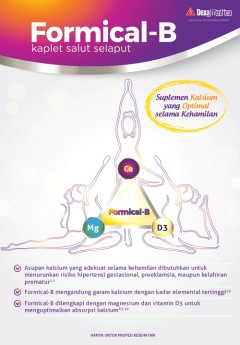
The International Federation of Gynecology and Obstetrics (FIGO) recommendati…
Adolescent, preconception, and maternal nutrition represent a major public health issue that affects not only the health of adolescents and women, but also that of future generations. These FIGO recommendations aim to address several issues relating to nutrition in adolescent and young women before, during, and after pregnancy
- Edition
- -
- ISBN/ISSN
- -
- Collation
- -
- Series Title
- -
- Call Number
- -
Essential Nutrient Interactions: Does Low or Suboptimal Magnesium Status Inte…
Although much is known about magnesium, its interactions with calcium and vitamin D are less well studied. Magnesium intake is low in populations who consume modern processed-food diets. Low magnesium intake is associated with chronic diseases of global concern [e.g., cardiovascular disease (CVD), type 2 diabetes, metabolic syndrome, and skeletal disorders], as is low vitamin D status. No simp…
- Edition
- -
- ISBN/ISSN
- -
- Collation
- -
- Series Title
- -
- Call Number
- -
Role of calcium supplementation during pregnancy in reducing risk of developi…
Hypertension in pregnancy stand alone or with proteinuria is one of the leading causes of maternal mortality and morbidity in the world. Epidemiological and clinical studies have shown that an inverse relationship exists between calcium intake and development of hypertension in pregnancy though the effect varies based on baseline calcium intake and pre-existing risk factors. The purpose of this…
- Edition
- -
- ISBN/ISSN
- -
- Collation
- -
- Series Title
- -
- Call Number
- -
 Computer Science, Information & General Works
  Philosophy & Psychology
  Religion
  Social Sciences
  Language
  Pure Science
  Applied Sciences
  Art & Recreation
  Literature
  History & Geography