Filter by
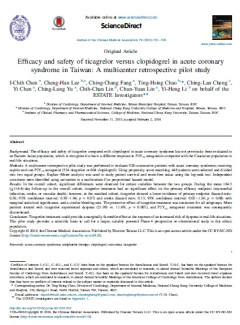
Efficacy and safety of ticagrelor versus clopidogrel in acute coronary syndro…
Ticagrelor treatment could provide a marginally favorable effect at the expense of an increased risk of dyspnea n real-life situations. This pilot study provides a scientific basis to call for a larger, suitably powered Phase 4 prospective or observational study in this ethnic population.
- Edition
- -
- ISBN/ISSN
- -
- Collation
- -
- Series Title
- -
- Call Number
- -
Challenges in the management of older patients with acute coronary syndromes …
Ischaemic heart disease (IHD), in particular acute coronary syndrome (ACS), comprising ST-elevation myocardial infarction, non-ST- elevation myocardial infarction and unstable angina, is the leading cause of death worldwide. Age is a major predictor of adverse outcome following ACS
- Edition
- -
- ISBN/ISSN
- -
- Collation
- -
- Series Title
- -
- Call Number
- -
Cardiovascular Implications of the COVID-19 Pandemic: A Global Perspective
The coronavirus disease 2019 (COVID-19), caused by severe acute respiratory syndrome coronavirus-2 (SARS-CoV-2), represents the pandemic of the century, with approximately 3.5 million cases and 250,000 deaths worldwide as of May 2020. Although respiratory symptoms usually dominate the clinical presentation, COVID-19 is now known to also have potentially serious cardiovascular consequences, in…
- Edition
- -
- ISBN/ISSN
- -
- Collation
- -
- Series Title
- -
- Call Number
- -
ESC Guidance for the Diagnosis and Management of CV Disease during the COVID-…
The SARS-CoV-2 causing COVID-19 has reached pandemic levels since March 2020. In the absence of vaccines or curative medical treatment, COVID-19 exerts an unprecedented global impact on public health and health care delivery. Owing to the unexpected need for large capacities of intensive care unit (ICU) beds with the ability to provide respiratory support and mechanical ventilation, temporary r…
- Edition
- -
- ISBN/ISSN
- -
- Collation
- -
- Series Title
- -
- Call Number
- -
Antiplatelet Therapy in Ischemic Stroke and Transient Ischemic Attack An Over…
Stroke is a leading cause of mortality and disability worldwide. Initial manifestations of acute cerebral ischemia, such as ischemic stroke and transient ischemic attack (TIA), are often followed by recurrent vascular events, including recurrent stroke. To reduce this burden, antiplatelet therapy is a key component of the management of noncardioembolic ischemic stroke and TIA.
- Edition
- -
- ISBN/ISSN
- -
- Collation
- -
- Series Title
- -
- Call Number
- -
Drug-eluting stents versus bare-metal stents for acute coronary syndrome (Review
Approximately 3.7 million people died from acute coronary syndrome worldwide in 2012. Acute coronary syndrome, also known as myocardial infarction or unstable angina pectoris, is caused by a sudden blockage of the blood supplied to the heartmuscle. Percutaneous coronary intervention is often used for acute coronary syndrome, but previous systematic reviews on the effects of drug-eluting stents …
- Edition
- -
- ISBN/ISSN
- -
- Collation
- -
- Series Title
- -
- Call Number
- -
Stent Thrombosis
The most dreaded complication with percutaneous coronary intervention with stents, either bare-metal or drug-eluting stents is stent thrombosis (ST) and it has a significant detrimental effect on the outcome for the patient. The initial attempts at intervention with bare-metal stents had much higher rates of ST compared with what is currently prevailing in the modern interventional world. Signi…
- Edition
- -
- ISBN/ISSN
- -
- Collation
- -
- Series Title
- -
- Call Number
- -
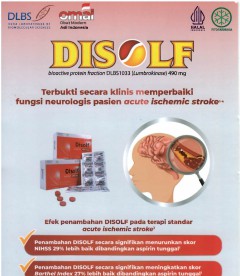
Uji Klinik Buta Ganda Perbedaan Profil Perdarahan Dan Outcome Klinis Pasien S…
DLBS1033 adalah enzim protease fibrinolitik yang bekerja menghidrolisis fibrin atau fibrinogen dan menstimulasi plasminogen menjadi plasmin. Plasminogen activator (e-PA) pada DLBS1033 mirip dengan tissue plasminogen activator (t-PA), sehingga memungkinkan adanya aktivitas trombolitik terhadap fibrin.
- Edition
- -
- ISBN/ISSN
- -
- Collation
- -
- Series Title
- -
- Call Number
- -
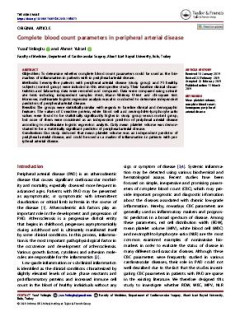
Complete blood count parameters in peripheral arterial disease
The groups were statistically similar with regards to baseline clinical and demographic features. The values of C-reactive protein, white blood cell and neutrophil-to-lymphocyte ratio values were found to be statistically significantly higher in study group versus control group, but none of them were considered as an independent predictor of peripheral arterial disease according to multivar…
- Edition
- -
- ISBN/ISSN
- -
- Collation
- -
- Series Title
- -
- Call Number
- -
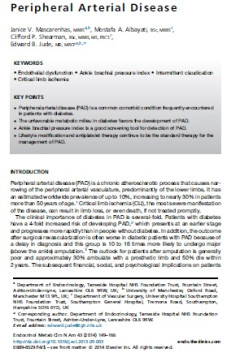
Peripheral Arterial Disease
Peripheral arterial disease (PAD) is a chronic atherosclerotic process that causes narrowing of the peripheral arterial vasculature, predominantly of the lower limbs. It has an estimated worldwide prevalence of up to 10%, increasing to nearly 30% in patients more than 50 years of age.1 Critical limb ischemia (CLI), the most severe manifestation of the disease, can result in limb loss, or even …
- Edition
- -
- ISBN/ISSN
- -
- Collation
- -
- Series Title
- -
- Call Number
- -
 Computer Science, Information & General Works
  Philosophy & Psychology
  Religion
  Social Sciences
  Language
  Pure Science
  Applied Sciences
  Art & Recreation
  Literature
  History & Geography