Filter by

Improved Persistence to Medication, Decreased Cardiovascular Events and Reduc…
Antihypertensive combination therapy reduces all-cause mortality and cardiovascular events when provided as single pill compared to identical drugs as multipills. This strongly supports the European Society of Cardiology/European Society of Hypertension and International Society of Hypertension guidelines recommending the use of a single-pill combination and thus should be more rigorously imple…
- Edition
- -
- ISBN/ISSN
- -
- Collation
- -
- Series Title
- -
- Call Number
- -
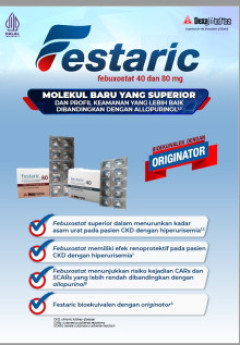
Hyperuricemia, A new cardiovascular risk
Hyperuricemia is strongly linked to increased cardiovascular risk, including hypertension, coronary artery disease, arrythmia, and heart failure. Uric acid, as the end-product of purine metabolism, plays a critical role in cellular processes, but elevated levels can drive inflammation and oxidative stress. This review aims to emphasize the robust association between hyperuricemia and cardiovasc…
- Edition
- -
- ISBN/ISSN
- -
- Collation
- -
- Series Title
- -
- Call Number
- -

Assessing the severity of acute pulmonary embolism-manuscript-2019
Acute pulmonary embolism (PE) is potentially fatal due either to a first massive episode or early recurrence; however, if diagnosed early, it can be effectively treated and in most cases cured. PE episodes have a wide spectrum of severity: from asymptomatic, detected incidentally to life-threatening with haemodynamic collapse. Consequently, optimal treatment may range from anticoagulant pills t…
- Edition
- -
- ISBN/ISSN
- -
- Collation
- -
- Series Title
- -
- Call Number
- -

Risk Factors for Stroke in the Chinese Population
Stroke is the leading cause of death in China. According to the Chinese Stroke Screening and Prevention Project, 8 main risk factors were assessed and individuals with 3 or more risk factors were identified as high-risk population of stroke. To explore the potential impropriety of counting the risk factors but ignoring the different strength of association of each risk factor, we performed thi…
- Edition
- -
- ISBN/ISSN
- -
- Collation
- -
- Series Title
- -
- Call Number
- -
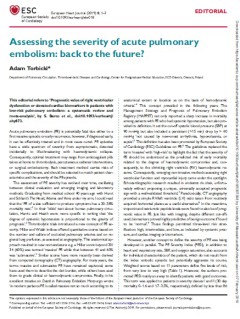
Assessing the severity of acute pulmonaryrnembolism: back to the future?
This editorial refers to ?Prognostic value of right ventricularrndysfunction or elevated cardiac biomarkers in patients withrnlow-risk pulmonary embolism: a systematic review andrnmeta-analysis?? by S. Barco et al.,
- Edition
- -
- ISBN/ISSN
- -
- Collation
- -
- Series Title
- -
- Call Number
- -

Prediction of stroke after cardiac catherization: no reason, no stroke
In this issue, Tokushige and colleagues incestigated the incidence of cerebrovascular compliactions detected by difussion-weighted, head-focused magnetic resonance imaging (MRI) within 48 hours after CAG and determined its clinical risk factor
- Edition
- -
- ISBN/ISSN
- -
- Collation
- -
- Series Title
- -
- Call Number
- -
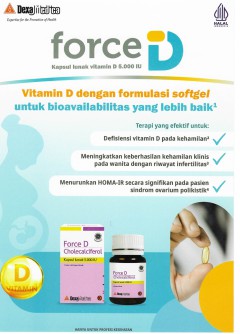
Vitamin D Supplementation, Serum 25(OH)D Concentrations and Cardiovascular Di…
Cardiovascular disease (CVD) risk factors are associated with low serum 25 hydroxyvitamin D (25(OH)D) concentrations in observational studies; however, clinical trial findings are inconsistent
- Edition
- -
- ISBN/ISSN
- -
- Collation
- -
- Series Title
- -
- Call Number
- -
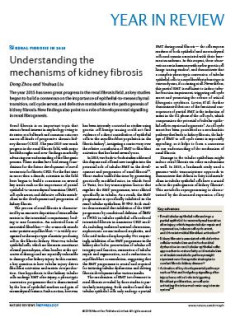
Understanding the mechanisms of kidney fibrosis
The year 2015 has seen great progress in the renal fibrosis field, as key studies began to build a consensus on the importance of epithelial-to‑mesenchymal transition, cell cycle arrest, and defective metabolism in the pathogenesis of kidney fibrosis. New findings also point to a role of developmental signalling in renal fibrogenesis
- Edition
- -
- ISBN/ISSN
- -
- Collation
- -
- Series Title
- -
- Call Number
- -
Veverimer versus placebo in patients with metabolic acidosis associated with …
Patients with advanced chronic kidney disease lose the capacity to fully excrete endogenous acid, resulting in chronic metabolic acidosis that increases the risk of disease progression and causes muscle catabolism and bone resorption. Veverimer, a non-absorbed, counterion-free, polymeric drug, selectively binds and removes hydrochloric acid from the gastrointestinal lumen, unlike current oral s…
- Edition
- -
- ISBN/ISSN
- -
- Collation
- -
- Series Title
- -
- Call Number
- -
Sacubitril valsartan
- Edition
- -
- ISBN/ISSN
- -
- Collation
- -
- Series Title
- -
- Call Number
- -
- Edition
- -
- ISBN/ISSN
- -
- Collation
- -
- Series Title
- -
- Call Number
- -
 Computer Science, Information & General Works
  Philosophy & Psychology
  Religion
  Social Sciences
  Language
  Pure Science
  Applied Sciences
  Art & Recreation
  Literature
  History & Geography