Filter by

Comparative effectiveness of inhaled fluticasone propionate/salmeterol and bu…
Asthma affects over 260 million people globally, with significant health impacts. The Global Initiative for Asthma (GINA) 2024 report recommends inhaled corticosteroid/long-acting β2-agonist (ICS/LABA) combinations, including fluticasone propionate/salmeterol (FP/SAL) and budesonide/formoterol (BUD/FOR), for maintenance treatment. Both combinations have demonstrated clinical benefits, with pre…
- Edition
- -
- ISBN/ISSN
- -
- Collation
- -
- Series Title
- -
- Call Number
- -

Mometasone furoate in the management of asthma: a review
Inhaled corticosteroids (ICS) have proven to be the most effective and essential therapy for the treatment of bronchial asthma. The 2007 National Asthma Education and Prevention Program guidelines recommend ICS as preferred therapy for patients with mild to severe persistent asthma. Mometasone furoate (MF) is a relatively new ICS agent with high affi nity for the glucocorticoid receptor. It is …
- Edition
- -
- ISBN/ISSN
- -
- Collation
- -
- Series Title
- -
- Call Number
- -
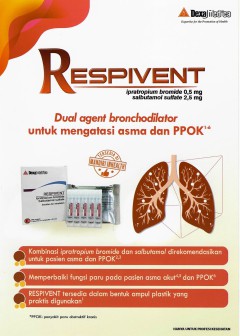
Anticholinergics in the treatment of children and adults with acute asthma: a…
Current guidelines recommend the use of a combination of inhaled b2 agonists and anticholinergics, particularly for patients with acute severe or life threatening asthma in the emergency setting. However, this statement is based on a relatively small number of randomised controlled trials and related systematic reviews. A review was undertaken to incorporate the more recent evidence available a…
- Edition
- -
- ISBN/ISSN
- -
- Collation
- -
- Series Title
- -
- Call Number
- -
Combined inhaled beta-agonist and anticholinergic agents for emergency manage…
Inhaled short-acting anticholinergics (SAAC) and short-acting beta -agonists (SABA) are effective therapies for adult patients with acute asthma who present to the emergency department (ED). It is unclear, however, whether the combination of SAAC and SABA treatment is more effective in reducing hospitalisations compared to treatment with SABA alone
- Edition
- -
- ISBN/ISSN
- -
- Collation
- -
- Series Title
- -
- Call Number
- -
Combined inhaled anticholinergic agonists for initial treatment of a (Review)
There are several treatment options for managing acute asthma exacerbations (sustained worsening of symptoms that do not subside with regular treatment and require a change inmanagement). Guidelines advocate the use of inhaled short acting beta2-agonists (SABAs) in children experiencing an asthma exacerbation. Anticholinergic agents, such as ipratropium bromide and atropine sulfate, have a slo…
- Edition
- -
- ISBN/ISSN
- -
- Collation
- -
- Series Title
- -
- Call Number
- -

Efficacy of procaterol combined with inhaled budesonide for treatment of coug…
A randomized, double-blind, placebo-controlled, multicenter trial was undertaken to evaluate the efficacy and safety of procaterol combined with budesonide for treatment of patients with cough-variant asthma. Procaterol combined with budesonide was well tolerated and superior to budesonide alone at improving cough symptoms and patient quality of life.
- Edition
- -
- ISBN/ISSN
- -
- Collation
- -
- Series Title
- -
- Call Number
- -
Pharmacological strategies for self management of asthma exacerbations
Written action plans are effective within asthma self-management, but there are few guidelines about the specific medication adjustments which can be recommended for selftreatment of exacerbations. This review examines pharmacological strategies for self-management of asthma exacerbations in adults, including those for inhaled corticosteroid/long-acting b2-agonist (ICS/LABA) users.
- Edition
- -
- ISBN/ISSN
- -
- Collation
- -
- Series Title
- -
- Call Number
- -
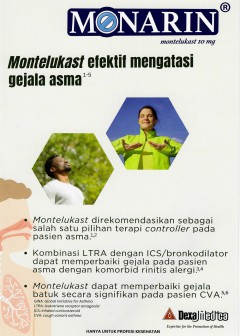
Role of Montelukast in Asthma and Allergic rhinitis patients
Our objective was to evaluate the effect of Montelukast on the symptoms of asthma and allergic rhinitis (AR), assess its effect on the individual quality of life (QoL), and estimate the proportion of participants having adverse effects
- Edition
- -
- ISBN/ISSN
- -
- Collation
- -
- Series Title
- -
- Call Number
- -
Clinical, Physiological and AntiInflammatory Effect of Montelukast in Patient…
Cough variant asthma (CVA) is a phenotype of asthma presenting solely with coughing, characterized by airway hyperresponsiveness, eosinophilic inflammation and a cough response to bronchodilators. Leukotriene receptor antagonists (LTRAs) are antiasthma medications with antiinflammatory and bronchodilatory properties. Although LTRAs exert antitussive effects in CVA, the mechanisms involved are u…
- Edition
- -
- ISBN/ISSN
- -
- Collation
- -
- Series Title
- -
- Call Number
- -
Acute Bronchial Asthma
Acute asthma is the third commonest cause of pediatric emergency visits at PGIMER. Typically, it presents with acute onset respiratory distress and wheeze in a patient with past or family history of similar episodes. The severity of the acute episode of asthma is judged clinically and categorized asmild, moderate and severe. The initial therapy consists of oxygen, inhaled beta-2 agonists (salbu…
- Edition
- -
- ISBN/ISSN
- -
- Collation
- -
- Series Title
- -
- Call Number
- -
 Computer Science, Information & General Works
  Philosophy & Psychology
  Religion
  Social Sciences
  Language
  Pure Science
  Applied Sciences
  Art & Recreation
  Literature
  History & Geography