Filter by

Mometasone Furoate in Non-Allergic Rhinitis: A Real-Life Italian Study
NARNE is the most frequent cytological pattern (48% of the total sample). The therapeutic response shows improvement in olfactory function and QoL. Conclusions: The results of this study confirm that intranasal mometasone furoate is an effective treatment for patients with NAR.
- Edition
- -
- ISBN/ISSN
- -
- Collation
- -
- Series Title
- -
- Call Number
- -

Efficacy of mometasone furoate nasal spray in the treatment of allergic rhini…
Several randomized, double-blind, placebo-controlled clinical trials have demonstrated the efficacy of mometasone furoate nasal spray (MFNS) in the treatment of allergic rhinitis (AR) thus allowing for a meta-analysis to determine the overall treatment effect
- Edition
- -
- ISBN/ISSN
- -
- Collation
- -
- Series Title
- -
- Call Number
- -

Safety of Mometasone Furoate Nasal Spray in Children with Allergic Rhinitis a…
Current treatment guidelines recommend intranasal corticosteroids or nonsedating antihistamines as first-line therapy for allergic rhinitis (AR). Because of concerns regarding the systemic safety of intranasal corticosteroids in children, the present study was conducted to evaluate systemic activity of mometasone furoate nasal spray (MFNS) in children as young as 2 years of age with AR. This wa…
- Edition
- -
- ISBN/ISSN
- -
- Collation
- -
- Series Title
- -
- Call Number
- -

Comparative nasal airflow with loratadine-pseudoephedrine and fluticasone nas…
Although it is known that oral antihistamine-pseudoephedrine combination tablets have a faster onset than intranasal corticosteroid sprays in the treatment of allergic rhinitis after the first dose, the magnitude of change has not been measured in a comparative manner. Furthermore, the sensation of sprayed liquid in the nose may lead patients to mistakenly believe that intranasal steroid sprays…
- Edition
- -
- ISBN/ISSN
- -
- Collation
- -
- Series Title
- -
- Call Number
- -

Role of Montelukast in Asthma and Allergic rhinitis patients
Our objective was to evaluate the effect of Montelukast on the symptoms of asthma and allergic rhinitis (AR), assess its effect on the individual quality of life (QoL), and estimate the proportion of participants having adverse effects
- Edition
- -
- ISBN/ISSN
- -
- Collation
- -
- Series Title
- -
- Call Number
- -
BSACI guideline for the diagnosis and management of allergic and non-allergic…
This is an updated guideline for the diagnosis and management of allergic and non-allergic rhinitis, first published in 2007. It was produced by the Standards of CareCommittee of the British Society of Allergy and Clinical Immunology, using accre-dited methods. Allergic rhinitis is common and affects 10–15% of children and 26%of adults in the UK, it affects quality of life, school and work at…
- Edition
- -
- ISBN/ISSN
- -
- Collation
- -
- Series Title
- -
- Call Number
- -

Efficacy and safety of fexofenadine hydrochloride for treatment of seasonal a…
H1-receptor antagonists are effective for the treatment of seasonal allergic rhinitis. In rare circumstances, some second-generation H1-receptor antagonists have been associated with prolongation of the corrected QT interval (QTc), thus increasing the risk of ventricular arrhythmias. Fexofenadine HCl, the carboxylic acid metabolite of terfenadine, is a new second-generation antihistamine that i…
- Edition
- -
- ISBN/ISSN
- -
- Collation
- -
- Series Title
- -
- Call Number
- -
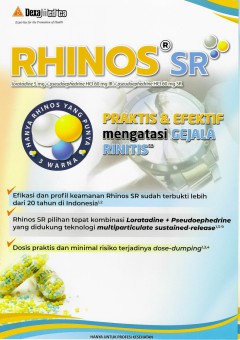
The efficacy of Rhinos® SR on nasal resistance and nasal symptoms in patient…
Rhinos® SR is a fixed combination of 5 mg loratadine and 60 mg pseudoephedrine immediate release and 60 mg pseudoephedrine sustained release. The present study was aimed to assess the efficacy of Rhinos® SR on nasal airway resistance (NAR) objectively using rhinomanometer and on nasal symptoms in patients with perennial allergic rhinitis (PAR) in a tropical country. This was a randomized, dou…
- Edition
- -
- ISBN/ISSN
- -
- Collation
- -
- Series Title
- -
- Call Number
- -
Efficacy of Loratadine Compared with Fexofenadine or Placebo for the Treatmen…
Compared with placebo, both loratadine and fexofenadine provided significant relief of the symptoms of SAR. At the first assessment following the first dose, however, loratadine demonstrated a significant reduction from baseline in TSS compared with fexofenadine. In addition, time-to-event analysis indicated that the reduction in symptoms occurred significantly earlier with loratadine
- Edition
- -
- ISBN/ISSN
- -
- Collation
- -
- Series Title
- -
- Call Number
- -
Allergic rhinitis and asthma: How important is the link?
Dysfunction of the upper and lower airways frequently coexist, and they appear to share key elements of pathogenesis. Data from epidemiologic studies indicate that nasal symptoms are experienced by as many as 78% of patients with asthma and that asthma is experienced by as many as 38% of patients with allergic rhinitis. Studies also have identified a temporal relation between the onset of rh…
- Edition
- -
- ISBN/ISSN
- -
- Collation
- -
- Series Title
- -
- Call Number
- -
 Computer Science, Information & General Works
  Philosophy & Psychology
  Religion
  Social Sciences
  Language
  Pure Science
  Applied Sciences
  Art & Recreation
  Literature
  History & Geography