Filter by
Medical Nutrition Therapy for Patients with None Dialysis-Dependent Chronic K…
CHRONIC KIDNEY DISEASE (CKD) currently affects approximately 15% of the US population or 30 million US adults,1 but incidence is projected to increase over the next 2 decades due to the ongoing obesity epidemic and the aging of the US population.2 Almost half of all US adults aged 65 years and older are predicted to develop CKD during their lifetime.2 The economic impact of CKD is substantial
- Edition
- -
- ISBN/ISSN
- -
- Collation
- -
- Series Title
- -
- Call Number
- -
Improved Myocardial Perfusion in Stable Angina Pectoris by Oral Lumbrokinase:…
This paper represents the first description of the use of oral lumbrokinase in the treatment of chronic coronary artery disease with objective assessment using MPI. Oral lumbrokinase improves regional myocardial perfusion in patients with stable angina.
- Edition
- -
- ISBN/ISSN
- -
- Collation
- -
- Series Title
- -
- Call Number
- -
Effect of Initial Heart Rate on Cardiac Troponin and Ejection Fraction in Pat…
Increased heart rate has shown to be associated with adverse cardiovascular outcomes. This aim of this study was to find the association of troponin level and ejection fraction (EF) with triage heart rate in patients with non-ST elevation myocardial infarction (NSTEMI). It was hypothesized that heart rate at triage will be independently associated with higher troponin level and lower EF after …
- Edition
- -
- ISBN/ISSN
- -
- Collation
- -
- Series Title
- -
- Call Number
- -
Spironolactone versus placebo, bisoprolol, and doxazosin to determine the opt…
Optimal drug treatment for patients with resistant hypertension is undefi ned. We aimed to test the hypotheses that resistant hypertension is most often caused by excessive sodium retention, and that spironolactone would therefore be superior to non-diuretic add-on drugs at lowering blood pressure.
- Edition
- -
- ISBN/ISSN
- -
- Collation
- -
- Series Title
- -
- Call Number
- -
Deep vein thrombosis and pulmonary embolism
Deep vein thrombosis and pulmonary embolism, collectively referred to as venous thromboembolism, constitute a major global burden of disease. The diagnostic work-up of suspected deep vein thrombosis or pulmonary embolism includes the sequential application of a clinical decision rule and D-dimer testing. Imaging and anticoagulation can be safely withheld in patients who are unlikely to have …
- Edition
- -
- ISBN/ISSN
- -
- Collation
- -
- Series Title
- -
- Call Number
- -
Perioperative fluid therapy recommendations for major abdominal surgery. Via …
About 230 million patients undergo surgery each year.1 Reported mortality rates for elective non-cardiac surgery range from 1% to 4%.2 Although less than 15% of inpatient procedures are performed in high-risk patients, such patients account for 80% of deaths
- Edition
- -
- ISBN/ISSN
- -
- Collation
- -
- Series Title
- -
- Call Number
- -
Deep vein thrombosis in pediatric patients
Due to advances in caring for critically ill children and those with chronic diseases, rates of deep vein thrombosis (DVT) are increasing in children. Risk factors consist of central venous catheters, chronic medical conditions, thrombophilia, and various medications. Compression Doppler ultrasonography is the method most commonly used to diagnoseDVT, and patientswill usually present with p…
- Edition
- -
- ISBN/ISSN
- -
- Collation
- -
- Series Title
- -
- Call Number
- -
Incidence of deep vein thrombosis in patients undergoing breast reconstructio…
Breast reconstruction is associated with multiple risk factors for venous thromboembolism. However, the incidence of deep vein thrombosis in patients undergoing breast reconstruction is uncertain.
- Edition
- -
- ISBN/ISSN
- -
- Collation
- -
- Series Title
- -
- Call Number
- -
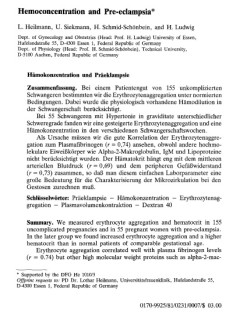
Hemoconcentration and Pre-eclampsia
We measured erythrocyte aggregation and hematocrit in 155 uncomplicated pregnancies and in 55 pregnant women with pre-eclampsia. In the later group we found increased erythrocyte aggregation and a higher hematocrit than in normal patients of comparable gestational age
- Edition
- -
- ISBN/ISSN
- -
- Collation
- -
- Series Title
- -
- Call Number
- -
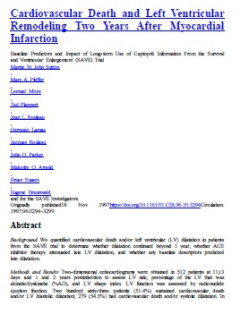
Cardiovascular Death and Left Ventricular Remodeling Two Years After Myocardi…
- Edition
- -
- ISBN/ISSN
- -
- Collation
- -
- Series Title
- -
- Call Number
- -
- Edition
- -
- ISBN/ISSN
- -
- Collation
- -
- Series Title
- -
- Call Number
- -
 Computer Science, Information & General Works
  Philosophy & Psychology
  Religion
  Social Sciences
  Language
  Pure Science
  Applied Sciences
  Art & Recreation
  Literature
  History & Geography