Filter by

Aldosterone’s Rapid, Nongenomic Effects Are Mediated by Striatin: A Modulat…
The cellular responses to steroids are mediated by 2 general mechanisms: genomic and rapid/ nongenomic effects. Identification of the mechanisms underlying aldosterone (ALDO)’s rapid vs their genomic actions is difficult to study, and these mechanisms are not clearly understood. Recent data suggest that striatin is a mediator of nongenomic effects of estrogen. We explored the hypothesis that …
- Edition
- -
- ISBN/ISSN
- -
- Collation
- -
- Series Title
- -
- Call Number
- -
Inositol – Clinical Applications for Exogenous Use
Recent advances in nutritional and biochemical research have documented inositol as an important dietary and cellular constituent. The processes involved in inositol metabolism and its derivatives in the tissues of mammals have been characterized in vivo as well as at the enzymatic level. Biochemical functions defined for phosphatidylinositol in biological membranes include the regulation of ce…
- Edition
- -
- ISBN/ISSN
- -
- Collation
- -
- Series Title
- -
- Call Number
- -

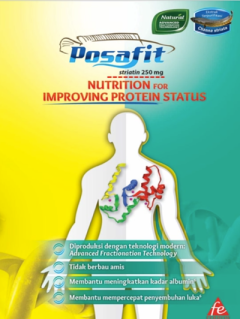
Potential effect of striatin (DLBS0333), a bioactive protein fraction isolate…
Striatin contained four major bioactive proteins with approximate molecular weight of 8.3, 10.9, 15.4 and 16.7 kDa. In addition to proteins, striatin also contained amino acids (10 essential and 7 non essential amino acids), fatty acids (palmitic acid, oleic acid, stearic acid, linoleic acid, arachidonic acid), vitamins (vitamin A, vitamin B6) and other nutrients (carbohydrate, dietary fiber, b…
- Edition
- -
- ISBN/ISSN
- -
- Collation
- -
- Series Title
- -
- Call Number
- -

Channa striatus capsules induces cytokine conversion in pulmonary tuberculosi…
The rate of positive sputum smear decline was more pronounced in the Channa striatus group but did not reach statistically different value between groups. The levels of TNF-α, IFN-γ, and IL-10 were not significantly different in Channa striatus group compared to placebo group at baseline (week 0). But at week 12, the supplementation of Channa striatus capsule significantly decreased TNF-α, I…
- Edition
- -
- ISBN/ISSN
- -
- Collation
- -
- Series Title
- -
- Call Number
- -

Efficacy and safety of domperidone and metoclopramide on human milk productio…
Breastfeeding is the most advantageous nutrition for infants because of its many health benefits. However, lactation insufficiency is a prevalent issue among women, particularly those who give birth prematurely. Galactagogues, such as domperidone and metoclopramide, have been reported and may be beneficial for lactation insufficiency. However, the optimal pharmacological galactagogue remains un…
- Edition
- -
- ISBN/ISSN
- -
- Collation
- -
- Series Title
- -
- Call Number
- -
AGA Clinical Practice Guideline on Management of Gastroparesis
BACKGROUND & AIMS: Gastroparesis is a complex gastric motility disorder characterized by nausea, vomiting, and other symptoms associated with a delay in gastric emptying in the absence of mechanical obstruction. Variations in diagnostic testing and limited effective treatments make caring for this patient population challenging. The American Gastroenterological Association developed this guidel…
- Edition
- -
- ISBN/ISSN
- -
- Collation
- -
- Series Title
- -
- Call Number
- -

Is there a link between plasma progesterone 1–2 days before frozen embryo t…
Objective: To study the efficacy of a new P preparation in aqueous solution for subcutaneous injection for inducing the predecidual transformation of the endometrium.
- Edition
- -
- ISBN/ISSN
- -
- Collation
- -
- Series Title
- -
- Call Number
- -

A randomized trial comparing the endometrial effects of daily subcutaneous ad…
Objective: To study the efficacy of a new P preparation in aqueous solution for subcutaneous injection for inducing the predecidual transformation of the endometrium
- Edition
- -
- ISBN/ISSN
- -
- Collation
- -
- Series Title
- -
- Call Number
- -

Luteal support after in-vitro fertilization: Crinone 8%, a sustained release …
Two progesterone presentations, a vaginal application of 90 mg progesterone per day (Crinone) or 300 mg progesterone administered orally (Utrogestan), were compared for luteal phase support of patients undergoing an in-vitro fertilization (IVF) procedure. A total of 283 patients were randomly allocated to either treatment. The treatment started within 24 h after the embryo transfer procedure an…
- Edition
- -
- ISBN/ISSN
- -
- Collation
- -
- Series Title
- -
- Call Number
- -

Absorption of micronized progesterone from a nonliquefying vaginal cream*
An effective and convenient method to administer progesterone (P) would be useful. Injections assure reliable absorption1 but are painful. Vaginal P suppositories avoid the pain of injection and are well absorbed, but suppositories sustain P levels less effectively. Suppositories are difficult to place high in the vagina and liquefy at body temperature, which leads to substantial vaginal disc…
- Edition
- -
- ISBN/ISSN
- -
- Collation
- -
- Series Title
- -
- Call Number
- -
 Computer Science, Information & General Works
  Philosophy & Psychology
  Religion
  Social Sciences
  Language
  Pure Science
  Applied Sciences
  Art & Recreation
  Literature
  History & Geography