Filter by
Abdominal Pain, the Adolescent and Altered Brain Structure and Function
Irritable bowel syndrome (IBS) is a functional gastrointestinal (GI) disorder of unknown etiology. Although relatively common in children, how this condition affects brain structure and function in a pediatric population remains unclear. Here, we investigate brain changes in adolescents with IBS and healthy controls. Imaging was performed with a Siemens 3 Tesla Trio Tim MRI scanner equipped wit…
- Edition
- -
- ISBN/ISSN
- -
- Collation
- -
- Series Title
- -
- Call Number
- -
The Management of Paediatric Functional Abdominal Pain Disorders: Latest Evid…
Recurrent abdominal pain (RAP) is one of the most common health complaints in both children and adults. Although RAP is considered a functional disorder rather than an organic disease, affected children and their families can still experience anxiety and concerns that can interfere with school, sports, and regular daily activities and lead to frequent attendances at pediatric emergency departme…
- Edition
- -
- ISBN/ISSN
- -
- Collation
- -
- Series Title
- -
- Call Number
- -
Unusual Complication following a Myomectomy: Colic Migration of a Forgotten A…
Surgical sponges are the most common retained foreign bodies following surgery. The morbidity of this condition is illustrated herein with the case of a 36-year-old female patient with a history ofmyomectomy 5months before her admission into our unit for enterocutaneous fistula. Although imaging and etiological investigations were made, diagnosis was carried out only by laparotomy. Theforeign b…
- Edition
- -
- ISBN/ISSN
- -
- Collation
- -
- Series Title
- -
- Call Number
- -
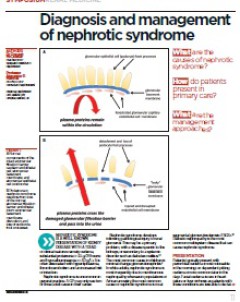
Diagnosis and management of nephrotic syndrome
NEPHROTIC SYNDROME IS A WELL KNOWN PRESENTATION OF KIDNEY DISEASE WITH A TRIAD of clinical features namely oedema, substantial proteinuria (> 3.5 g/24 hours) and hypoalbuminaemia (< 30 g/L). It is often associated with hyperlipidaemia, thromboembolism and an increased risk of infection.
- Edition
- -
- ISBN/ISSN
- -
- Collation
- -
- Series Title
- -
- Call Number
- -
Pathophysiology, Diagnosis and Clinical Management of Hepatorenal Syndrome: F…
Advanced cirrhosis is frequently associated with renal dysfunction. Hepatorenal syndrome (HRS) is characterized by the occurrence of kidney injury in cirrhotic patients in the absence of other identifiable causes. HRS is classified in 2 different types. Type 1 is characterized by acute renal failure and rapid functional deterioration of other organs, usually related to a precipitating event.…
- Edition
- -
- ISBN/ISSN
- -
- Collation
- -
- Series Title
- -
- Call Number
- -
Hepatorenal syndrome: current concepts related to diagnosis and management
Renal failure in cirrhotic patients is a very severe condition. Hepatorenal syndrome has the worst prognosis among all causes of kidney failure in such patients. Hepatorenal syndrome is diagnosed especially in cirrhotic patients with ascites who develop loss renal function, despite diuretic suspension and volume expansion with albumin and for whom other causes of kidney injury have been exclude…
- Edition
- -
- ISBN/ISSN
- -
- Collation
- -
- Series Title
- -
- Call Number
- -
A comprehensive review on clinical outcome of probiotic and synbiotic therapy…
The composition of gut microflora and its metabolic activity are closely correlated with the host immune system, and the changes in the biometric of the microbiome lead to inflammatory diseases like inflammatory bowel disease. The supplementation of probiotics and synbiotic could indeed manipulate the microflora, which can be an alternative therapy for ulcerative colitis, and Crohn’s disease.
- Edition
- -
- ISBN/ISSN
- -
- Collation
- -
- Series Title
- -
- Call Number
- -
Recent advances in the management of radiation colitis
Radiation colitis, an insidious, progressive disease of increasing frequency, develops 6 mo to 5 years after regional radiotherapy for malignancy, owing to the deleterious effects of the latter on the colon and the small intestine. When dealing with radiation colitis and its complications, the most conservative modality should be employed because the areas of intestinal injury do not tend to h…
- Edition
- -
- ISBN/ISSN
- -
- Collation
- -
- Series Title
- -
- Call Number
- -
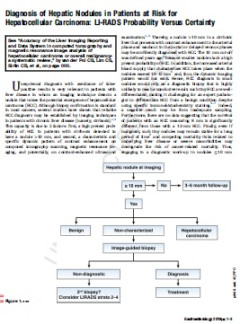
Diagnosis of Hepatic Nodules in Patients at Risk for Q1 Hepatocellular Carcin…
Unequivocal diagnosis with avoidance of falsepositive results is very relevant in patients with liver disease in whom an imaging technique detects a nodule that raises the potential emergence of hepatocellular carcinoma (HCC). Although biopsy confirmation is standard in most cancers, several studies have shown that reliable HCC diagnosis may be established by imaging techniques in patients wit…
- Edition
- -
- ISBN/ISSN
- -
- Collation
- -
- Series Title
- -
- Call Number
- -
Acute Liver Failure
- Edition
- -
- ISBN/ISSN
- -
- Collation
- -
- Series Title
- -
- Call Number
- -
- Edition
- -
- ISBN/ISSN
- -
- Collation
- -
- Series Title
- -
- Call Number
- -
 Computer Science, Information & General Works
  Philosophy & Psychology
  Religion
  Social Sciences
  Language
  Pure Science
  Applied Sciences
  Art & Recreation
  Literature
  History & Geography