Filter by
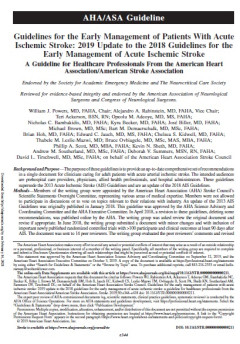
Guidelines for the Early Management of Patients With Acute Ischemic Stroke: 2…
The purpose of these guidelines is to provide an up-to-date comprehensive set of recommendations in a single document for clinicians caring for adult patients with acute arterial ischemic stroke. The intended audiences are prehospital care providers, physicians, allied health professionals, and hospital administrators. These guidelines supersede the 2013 Acute Ischemic Stroke (AIS) Guideline…
- Edition
- -
- ISBN/ISSN
- -
- Collation
- -
- Series Title
- -
- Call Number
- -
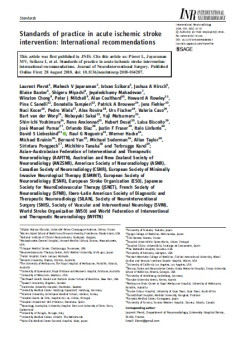
Standards of practice in acute ischemic stroke intervention: International re…
After the five positive randomized controlled trials showing the benefit of mechanical thrombectomy (MT) in the management of acute ischemic stroke (AIS) with emergent large vessel occlusion (ELVO), a multisociety meeting was organized during the 16th Congress of the World Federation of Interventional and Therapeutic Neuroradiology (WFITN), October 2015, Gold Coast, Australia. This meeting was…
- Edition
- -
- ISBN/ISSN
- -
- Collation
- -
- Series Title
- -
- Call Number
- -
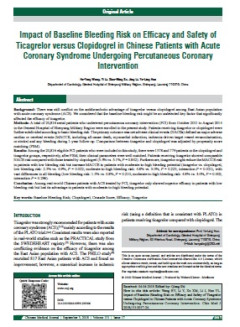
Impact of Baseline Bleeding Risk on Efficacy and Safety of Ticagrelor versus …
Among the 20,816 eligible PCI patients who were included in this study, there were 1578 and 779 patients in the clopidogrel and ticagrelor groups, respectively, after PSM, their clinical parameters were well matched. Patients receiving ticagrelor showed comparable NACE risk compared with those treated by clopidogrel (5.3% vs. 5.1%, P = 0.842). Furthermore, ticagrelor might reduce the MACCE ris…
- Edition
- -
- ISBN/ISSN
- -
- Collation
- -
- Series Title
- -
- Call Number
- -
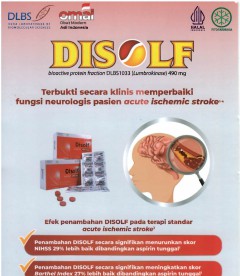
Uji Klinik Buta Ganda Perbedaan Profil Perdarahan Dan Outcome Klinis Pasien S…
DLBS1033 adalah enzim protease fibrinolitik yang bekerja menghidrolisis fibrin atau fibrinogen dan menstimulasi plasminogen menjadi plasmin. Plasminogen activator (e-PA) pada DLBS1033 mirip dengan tissue plasminogen activator (t-PA), sehingga memungkinkan adanya aktivitas trombolitik terhadap fibrin.
- Edition
- -
- ISBN/ISSN
- -
- Collation
- -
- Series Title
- -
- Call Number
- -
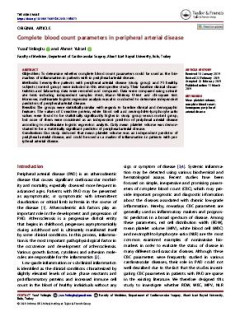
Complete blood count parameters in peripheral arterial disease
The groups were statistically similar with regards to baseline clinical and demographic features. The values of C-reactive protein, white blood cell and neutrophil-to-lymphocyte ratio values were found to be statistically significantly higher in study group versus control group, but none of them were considered as an independent predictor of peripheral arterial disease according to multivar…
- Edition
- -
- ISBN/ISSN
- -
- Collation
- -
- Series Title
- -
- Call Number
- -
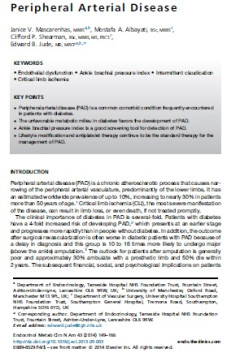
Peripheral Arterial Disease
Peripheral arterial disease (PAD) is a chronic atherosclerotic process that causes narrowing of the peripheral arterial vasculature, predominantly of the lower limbs. It has an estimated worldwide prevalence of up to 10%, increasing to nearly 30% in patients more than 50 years of age.1 Critical limb ischemia (CLI), the most severe manifestation of the disease, can result in limb loss, or even …
- Edition
- -
- ISBN/ISSN
- -
- Collation
- -
- Series Title
- -
- Call Number
- -

Clopidogrel : A Review of its Use in the Prevention of Thrombosis
Clopidogrel (Plavix®, Iscover®) selectively and irreversibly inhibits adenosine diphosphate (ADP)-induced platelet aggregation. Long-term administration of clopidogrel was associated with a modest but statistically significant advantage over aspirin in reducing adverse cardiovascular outcomes in patients with established cardiovascular disease in the CAPRIE trial. In other large well designed…
- Edition
- -
- ISBN/ISSN
- -
- Collation
- -
- Series Title
- -
- Call Number
- -
Effects of pretreatment with clopidogrel and aspirin followed by long-term th…
Despite the use of aspirin, there is still a risk of ischaemic events after percutaneous coronary intervention (PCI). We aimed to find out whether, in addition to aspirin, pretreatment with clopidogrel followed by long-term therapy after PCI is superior to a strategy of no pretreatment and short-term therapy for only 4 weeks after PCI.
- Edition
- -
- ISBN/ISSN
- -
- Collation
- -
- Series Title
- -
- Call Number
- -
Clopidogrel : A Review of its Use in the Prevention of Atherothrombosis
Clopidogrel is an ADP receptor antagonist that is indicated for the reduction of atherosclerotic events including myocardial infarction, ischaemic stroke and vascular death in patients with atherosclerosis manifested by recent stroke, myocardial infarction or established peripheral vascular disease
- Edition
- -
- ISBN/ISSN
- -
- Collation
- -
- Series Title
- -
- Call Number
- -
A randomised, blinded, trial of clopidogrel versus aspirin in patients at ris…
Many clinical trials have evaluated the benefit of long-term use of antiplatelet drugs in reducing the risk of clinical thrombotic events. Aspirin and ticlopidine have been shown to be effective, but both have potentially serious adverse effects. Clopidogrel, a new thienopyridine derivative similar to ticlopidine, is an inhibitor of platelet aggregation induced by adenosine diphosphate
- Edition
- -
- ISBN/ISSN
- -
- Collation
- -
- Series Title
- -
- Call Number
- -
 Computer Science, Information & General Works
  Philosophy & Psychology
  Religion
  Social Sciences
  Language
  Pure Science
  Applied Sciences
  Art & Recreation
  Literature
  History & Geography