Filter by
The Pathogenesis of Rheumatoid Arthritis
Rheumatoid arthritis is a common autoimmune disease that is associated with progressive disability, systemic complications, early death, and socioeconomic costs.1 The cause of rheumatoid arthritis is unknown, and the prognosis is guarded. However, advances in understanding the pathogenesis of the disease have fostered the development of new therapeutics, with improved outcomes. The current trea…
- Edition
- -
- ISBN/ISSN
- -
- Collation
- -
- Series Title
- -
- Call Number
- -
Knee osteoarthritis: pathophysiology and current treatment modalities
For decades, multiple attempts to fully understand knee osteoarthritis pathophysiology and natural history have been attempted. Despite the extensive amount of research regarding this topic, there are still marked controversies. This multifactorial condition gets influenced by local, systemic, and external factors and its progression and/or response to treatments widely varies from patient to p…
- Edition
- -
- ISBN/ISSN
- -
- Collation
- -
- Series Title
- -
- Call Number
- -
Rheumatoid arthritis in adults: management
The recommendations in this guideline represent the view of NICE, arrived at after careful consideration of the evidence available. When exercising their judgement, professionals and practitioners are expected to take this guideline fully into account, alongside the individual needs, preferences and values of their patients or the people using their service
- Edition
- -
- ISBN/ISSN
- -
- Collation
- -
- Series Title
- -
- Call Number
- -
Assessment of Quality of Life (QoL) in Systemic Lupus Erythematosus Patients …
One hundred sixty-four SLE patients were recruited for this study. Demographic information; clinical parameters; disease activity, as evaluated by the Systemic Lupus Erythematosus Disease Activity Index; and organ damage, as assessed by the Systemic Lupus International Collaborative Clinics/American College of Rheumatology Damage Index, were reported. Quality of life was assessed with a qualit…
- Edition
- -
- ISBN/ISSN
- -
- Collation
- -
- Series Title
- -
- Call Number
- -
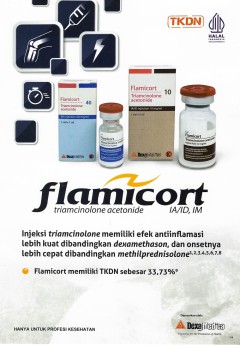
Ultrasound-guided intra-articular triamcinolone acetonide injection for treat…
To investigate the efficiency and clinical safety of intra-articular triamcinolone acetonide (TA) injection under the guide of ultrasonography combined with standard treatment for treating refractory small joints arthritis in rheumatoid arthritis (RA) patients. TA was injected upon confirmation of the needle inserting into the articular cavity. The dose was 40mg for the wrist, 20mg for the m…
- Edition
- -
- ISBN/ISSN
- -
- Collation
- -
- Series Title
- -
- Call Number
- -
COMPARED EFFICACY OF INTRA-ARTICULAR INJECTION OF METHYLPREDNISOLONE AND TRIA…
To compare the effect of two different corticosteroid types in bilateral and symmetrical knee osteoarthritis (OA). Methods: One hundred and twenty-six patients received injections of methylprednisolone acetate (MP) in one knee and triamcinolone hexacetonide (TH) in the contralateral knee. Patients were evaluated before injection and 2, 4, 8, 12, and 24 weeks after. Results: Mean patient age …
- Edition
- -
- ISBN/ISSN
- -
- Collation
- -
- Series Title
- -
- Call Number
- -
The comparison of dexamethasone and triamcinolone periarticular administratio…
Intraoperative periarticular injection of corticosteroid efectively reduces perioperative pain in total knee arthroplasty (TKA). However, which corticosteroid is most efective for intraoperative periarticular injection remains controversial. We compared the efects of corticosteroids between dexamethasone and triamcinolone acetonide periarticular administration for reducing pain and postoperativ…
- Edition
- -
- ISBN/ISSN
- -
- Collation
- -
- Series Title
- -
- Call Number
- -
Triamcinolone Acetonide Extended‑Release: A Review in Osteoarthritis Pain o…
Triamcinolone acetonide extended-release (ER) 32 mg (Zilretta®) is approved in the USA for the management of osteoarthritis (OA) pain of the knee and is administered as a single, 5 mL intra-articular (IA) injection. Although the therapeutic effects from IA corticosteroids are typically short-lived, triamcinolone acetonide ER is formulated in poly (lactic-co-glycolic acid) (PLGA) microsphere…
- Edition
- -
- ISBN/ISSN
- -
- Collation
- -
- Series Title
- -
- Call Number
- -
Intramuscular High-Dose Triamcinolone Acetonide in the Treatment of Severe Ch…
We describe our experience with administering intramuscular triamcinolone acetonide to 22 steroiddependent patients with asthma. These patients represent the minority of those with asthma whose disease is characterized by frequent emergency department visits, hospital admissions, and long-term dependency on oral corticosteroid therapy. The participants were randomly assigned to 2 treatment grou…
- Edition
- -
- ISBN/ISSN
- -
- Collation
- -
- Series Title
- -
- Call Number
- -
Intramuscular triamcinolone acetonide in chronic severe asthma
Seventeen subjects with chronic severe asthma completed a 48 week prospective, double blind study with crossover of treatment at 24 weeks, in which triamcinolone acetonide 80 mg intramuscularly every four weeks was compared with oral prednisolone 10 mg daily. Spirometry, twice daily measurements of peak expiratory flow rate, and self assessment of asthma symptom scores showed significant impro…
- Edition
- -
- ISBN/ISSN
- -
- Collation
- -
- Series Title
- -
- Call Number
- -
 Computer Science, Information & General Works
  Philosophy & Psychology
  Religion
  Social Sciences
  Language
  Pure Science
  Applied Sciences
  Art & Recreation
  Literature
  History & Geography