Filter by
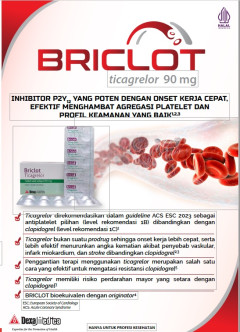
Ticagrelor Use in Stroke Patients: Past, Present, and Future
Antiplatelet medications are the mainstay for secondary stroke treatment. Aspirin, clopidogrel, and aspirin-dipyridamole are commonly used antiplatelet medications. Other antiplatelet medications such as ticagrelor and prasugrel have been majorly used in cardiovascular or neuro-interventional specialties. Recent studies have paved a way to their use in secondary stroke prevention. In this revi…
- Edition
- -
- ISBN/ISSN
- -
- Collation
- -
- Series Title
- -
- Call Number
- -

Effect of Combined Treatment with MLC601 (NeuroAiDTM) and Rehabilitation on P…
MLC601 has been shown in preclinical studies to enhance neurorestorative mechanisms after stroke. The aim of this post hoc analysis was to assess whether combining MLC601 and rehabilitation has an effect on improving functional outcomes after stroke. Methods: Data from the CHInese Medicine NeuroAiD Efficacy on Stroke (CHIMES) and CHIMES-Extension (CHIMES-E) studies were analyzed. CHIMES-E was …
- Edition
- -
- ISBN/ISSN
- -
- Collation
- -
- Series Title
- -
- Call Number
- -
The Use of NeuroAiD (MLC601) in Postischemic Stroke Patients
Aim: We aimed to assess the efficacy of MLC601 on functional recovery in patients givenMLC601 after an ischemic stroke. Methods: This is a retrospective cohort study comparing poststroke patients given open-label MLC601 (n = 30; 9 female) for three months and matching patients who did not receive MLC601 from our Stroke Data Bank. Outcome assessed was modified Rankin Scale (mRS) at three mont…
- Edition
- -
- ISBN/ISSN
- -
- Collation
- -
- Series Title
- -
- Call Number
- -
MLC901 Favors Angiogenesis and Associated Recovery after Ischemic Stroke in Mice
There is increasing evidence that angiogenesis, through new blood vessel formation, results in improved collateral circulation and may impact the long-term recovery of patients. In this study, we first investigated the preventive action of a 5-week pretreatment of MLC901, an herbal extract preparation derived from Chinese medicine, against the deleterious effects of ischemic stroke and its effe…
- Edition
- -
- ISBN/ISSN
- -
- Collation
- -
- Series Title
- -
- Call Number
- -
CHInese Medicine NeuroAiD Efficacy on Stroke Recovery – Extension Study (CH…
The CHInese Medicine NeuroAiD Efficacy on Stroke recovery (CHIMES) study was an international randomized double-blind placebo-controlled trial of MLC601 (NeuroAiD) in subjects with cerebral infarction of intermedi-ate severity within 72 h. CHIMES-E (Extension) aimed at evaluating the effects of the initial 3-month treatment with MLC601 on long-term outcome for up to 2 years. Methods: All subj…
- Edition
- -
- ISBN/ISSN
- -
- Collation
- -
- Series Title
- -
- Call Number
- -
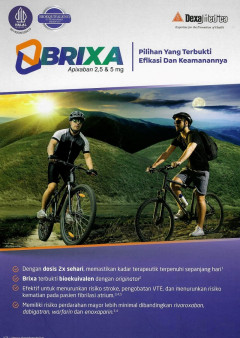
Importance of Pharmacokinetic Profile and Variability as Determinants of Dose…
Warfarin has been the mainstay oral anticoagulant (OAC) medication prescribed for stroke prevention in atrial fibrillation (AF) patients. However, warfarin therapy is challenging because of marked interindividual variability in dose and response, requiring frequent monitoring and dose titration. These limitations have prompted the clinical development of new OACs (NOACs) that directly target t…
- Edition
- -
- ISBN/ISSN
- -
- Collation
- -
- Series Title
- -
- Call Number
- -
Apixaban to prevent stroke in patients with atrial fibrillation: a review
Atrial fibrillation is a common, costly and morbid cardiovascular arrhythmia. Stroke prevention remains the mainstay of treatment for atrial fibrillation, and the recent advent of novel oral anticoagulants with direct factor IIa or factor Xa inhibition has significantly revolutionized this aspect of treatment for atrial fibrillation patients. This review focuses on the tolerability and efficac…
- Edition
- -
- ISBN/ISSN
- -
- Collation
- -
- Series Title
- -
- Call Number
- -
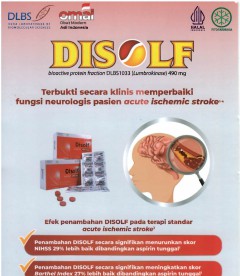
Improvement in Functional Status of Acute Ischemic Stroke Patients Treated wi…
DLBS0133 – a lumbrokinase fractionated from the earthworms, Lumbricus rubellus – was a promising agent in patients with ischemic stroke
- Edition
- -
- ISBN/ISSN
- -
- Collation
- -
- Series Title
- -
- Call Number
- -
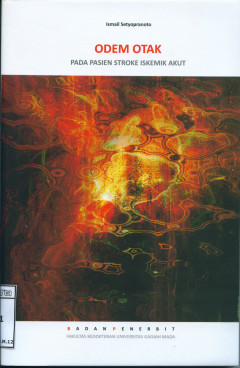
Odem otak: pada pasien stroke iskemik akut
- Edition
- -
- ISBN/ISSN
- 978-979-3177-77-9
- Collation
- xx, 228 hal.;illus.:23 cm
- Series Title
- -
- Call Number
- 616.81 SET o
- Edition
- -
- ISBN/ISSN
- 978-979-3177-77-9
- Collation
- xx, 228 hal.;illus.:23 cm
- Series Title
- -
- Call Number
- 616.81 SET o
Konsensus nasional pengelolaan stroke di Indonesia
- Edition
- -
- ISBN/ISSN
- -
- Collation
- -
- Series Title
- -
- Call Number
- 616.81 KEL k
- Edition
- -
- ISBN/ISSN
- -
- Collation
- -
- Series Title
- -
- Call Number
- 616.81 KEL k
 Computer Science, Information & General Works
  Philosophy & Psychology
  Religion
  Social Sciences
  Language
  Pure Science
  Applied Sciences
  Art & Recreation
  Literature
  History & Geography