THERAPEUTIC CLASS
Pleiotropic Effects of Statins on the Cardiovascular System
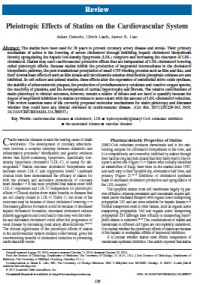
The statins have been used for 30 years to prevent coronary artery disease and stroke. Their primary
mechanism of action is the lowering of serum cholesterol through inhibiting hepatic cholesterol biosynthesis
thereby upregulating the hepatic low-density lipoprotein (LDL) receptors and increasing the clearance of LDLcholesterol.
Statins may exert cardiovascular protective effects that are independent of LDL-cholesterol lowering
called pleiotropic effects. Because statins inhibit the production of isoprenoid intermediates in the cholesterol
biosynthetic pathway, the post-translational prenylation of small GTP-binding proteins such as Rho and Rac, and
their downstream effectors such as Rho kinase and nicotinamide adenine dinucleotide phosphate oxidases are also
inhibited.
Availability
Detail Information
- Series Title
-
-
- Call Number
-
-
- Publisher
- : .,
- Collation
-
-
- Language
-
English
- ISBN/ISSN
-
-
- Classification
-
NONE
- Content Type
-
-
- Media Type
-
-
- Carrier Type
-
-
- Edition
-
-
- Subject(s)
- Specific Detail Info
-
Circ Res. 2017;120:229-243
- Statement of Responsibility
-
-
Other version/related
No other version available
File Attachment
Comments
You must be logged in to post a comment
 Computer Science, Information & General Works
  Philosophy & Psychology
  Religion
  Social Sciences
  Language
  Pure Science
  Applied Sciences
  Art & Recreation
  Literature
  History & Geography