Filter by
Safety and Success of Vaginal Birth after Cesarean Delivery in Patients with …
The objective of this study was to determine if preeclampsia (PRE) or gestational hypertension (GH) affects the rate of success of vaginal birth after cesarean delivery (VBAC), VBAC-related complications, or patient election to attempt VBAC. We performed a retrospective cohort study of all women who were offered VBAC from 1996 to 2000 in 17 community and university hospitals
- Edition
- -
- ISBN/ISSN
- -
- Collation
- -
- Series Title
- -
- Call Number
- -
Tuberculosis
Despite the availability of a cheap and effective treatment, tuberculosis still accounts for millions of cases of active disease and deaths worldwide. The disease disproportionately affects the poorest persons in both high-income and developing countries
- Edition
- -
- ISBN/ISSN
- -
- Collation
- -
- Series Title
- -
- Call Number
- -

Therapy duration and long-term outcomes in extra-pulmonary tuberculosis
Tuberculosis is classified as either pulmonary or extra-pulmonary (EPTB). While much focus has been paid to pulmonary tuberculosis, EPTB has received scant attention. Moreover, EPTB is viewed as one wastebasket diagnosis, as “the other” which is not pulmonary
- Edition
- -
- ISBN/ISSN
- -
- Collation
- -
- Series Title
- -
- Call Number
- -
Diagnosis and Treatment of Extrapulmonary Tuberculosis
Extrapulmonary tuberculosis (EPTB) constitutes about 20% of all cases of tuberculosis (TB) in Korea. Diagnosing EPTB remains challenging because clinical samples obtained from relatively inaccessible sites may be paucibacillary, thus decreasing the sensitivity of diagnostic tests. Whenever practical, every effort should be made to obtain appropriate specimens for both mycobacteriologic and hist…
- Edition
- -
- ISBN/ISSN
- -
- Collation
- -
- Series Title
- -
- Call Number
- -
Spironolactone versus placebo, bisoprolol, and doxazosin to determine the opt…
Optimal drug treatment for patients with resistant hypertension is undefi ned. We aimed to test the hypotheses that resistant hypertension is most often caused by excessive sodium retention, and that spironolactone would therefore be superior to non-diuretic add-on drugs at lowering blood pressure.
- Edition
- -
- ISBN/ISSN
- -
- Collation
- -
- Series Title
- -
- Call Number
- -
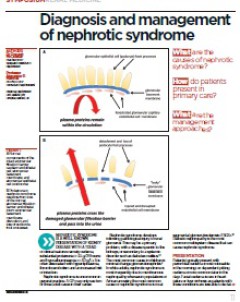
Diagnosis and management of nephrotic syndrome
NEPHROTIC SYNDROME IS A WELL KNOWN PRESENTATION OF KIDNEY DISEASE WITH A TRIAD of clinical features namely oedema, substantial proteinuria (> 3.5 g/24 hours) and hypoalbuminaemia (< 30 g/L). It is often associated with hyperlipidaemia, thromboembolism and an increased risk of infection.
- Edition
- -
- ISBN/ISSN
- -
- Collation
- -
- Series Title
- -
- Call Number
- -
Implementing an Antibiotic Stewardship Program: Guidelines by the Infectious …
Evidence-based guidelines for implementation and measurement of antibiotic stewardship interventions in inpatient populations including long-term care were prepared by a multidisciplinary expert panel of the Infectious Diseases Society of America and the Society for Healthcare Epidemiology of America. The panel included clinicians and investigators representing internal medicine, emergency medi…
- Edition
- -
- ISBN/ISSN
- -
- Collation
- -
- Series Title
- -
- Call Number
- -
Infectious Diseases Society of America and the Society for Healthcare Epidemi…
This document presents guidelines for developing institutional programs to enhance antimicrobial stewardship, an activity that includes appropriate selection, dosing, route, and duration of antimicrobial therapy. The multifaceted nature of antimicrobial stewardship has led to collaborative review and support of these recommendations by the following organizations: American Academy of Pediatric…
- Edition
- -
- ISBN/ISSN
- -
- Collation
- -
- Series Title
- -
- Call Number
- -
Pathophysiology, Diagnosis and Clinical Management of Hepatorenal Syndrome: F…
Advanced cirrhosis is frequently associated with renal dysfunction. Hepatorenal syndrome (HRS) is characterized by the occurrence of kidney injury in cirrhotic patients in the absence of other identifiable causes. HRS is classified in 2 different types. Type 1 is characterized by acute renal failure and rapid functional deterioration of other organs, usually related to a precipitating event.…
- Edition
- -
- ISBN/ISSN
- -
- Collation
- -
- Series Title
- -
- Call Number
- -
Hepatorenal syndrome: current concepts related to diagnosis and management
Renal failure in cirrhotic patients is a very severe condition. Hepatorenal syndrome has the worst prognosis among all causes of kidney failure in such patients. Hepatorenal syndrome is diagnosed especially in cirrhotic patients with ascites who develop loss renal function, despite diuretic suspension and volume expansion with albumin and for whom other causes of kidney injury have been exclude…
- Edition
- -
- ISBN/ISSN
- -
- Collation
- -
- Series Title
- -
- Call Number
- -
 Computer Science, Information & General Works
  Philosophy & Psychology
  Religion
  Social Sciences
  Language
  Pure Science
  Applied Sciences
  Art & Recreation
  Literature
  History & Geography