Filter by
Down Syndrome: Current Status, Challenges and Future Perspectives
Down syndrome (DS) is a birth defect with huge medical and social costs, caused by trisomy of whole or part of chromosome 21. It is the most prevalent genetic disease worldwide and the common genetic cause of intellectual disabilities appearing in about 1 in 400-1500 newborns. Although the syndrome had been described thousands of years before, it was named after John Langdon Down who described …
- Edition
- -
- ISBN/ISSN
- -
- Collation
- -
- Series Title
- -
- Call Number
- -
Epileptic spasms in individuals with Down syndrome: A review of the current l…
Epilepsy can occur in individuals with Down syndrome (DS), with epileptic spasms representing the most frequent seizure type in this population. Epileptic spasms can have devastating consequences on the development of individuals with the condition. This review sought to explore the lifetime prevalence and underlying mechanism of epileptic spasms in this population. We also aimed to review the…
- Edition
- -
- ISBN/ISSN
- -
- Collation
- -
- Series Title
- -
- Call Number
- -
Family Sense-Making After a Down Syndrome Diagnosis
The script of parenting shifts when parents learn of their child’s Down syndrome diagnosis. To build a theory of the diagnostic experience and early family sense-making process, we interviewed 33 parents and nine grandparents living in the United States who learned prenatally or neonatally of their child’s diagnosis. The core category of rescuing hope for the future encompassed the social p…
- Edition
- -
- ISBN/ISSN
- -
- Collation
- -
- Series Title
- -
- Call Number
- -
The effects of age at menarche and first sexual intercourse on reproductive a…
There is substantial variation in the timing of significant reproductive life events such as menarche and first sexual intercourse. Life history theory explains this variation as an adaptive response to an individual’s environment and it is important to examine how traits within life history strategies affect each other. Here we applied Mendelian randomization (MR) methods to investigate whet…
- Edition
- -
- ISBN/ISSN
- -
- Collation
- -
- Series Title
- -
- Call Number
- -
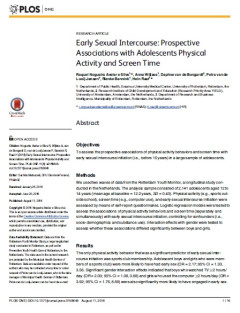
Early Sexual Intercourse: Prospective Associations with Adolescents Physical …
To assess the prospective associations of physical activity behaviors and screen time with early sexual intercourse initiation (i.e., before 15 years) in a large sample of adolescents
- Edition
- -
- ISBN/ISSN
- -
- Collation
- -
- Series Title
- -
- Call Number
- -
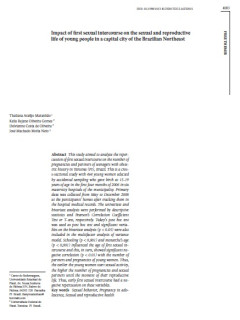
Impact of first sexual intercourse on the sexual and reproductive life of you…
This study aimed to analyze the repercussion of first sexual intercourse on the number of pregnancies and partners of teenagers with obstetric history in Teresina (PI), Brazil. This is a cross-sectional study with 464 young women selected by accidental sampling who gave birth at 15-19 years of age in the first four months of 2006 in six maternity hospitals of the municipality
- Edition
- -
- ISBN/ISSN
- -
- Collation
- -
- Series Title
- -
- Call Number
- -
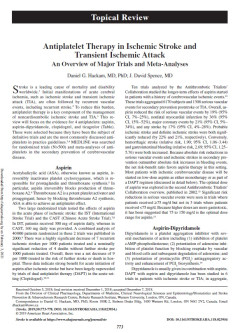
Antiplatelet Therapy in Ischemic Stroke and Transient Ischemic Attack An Over…
Stroke is a leading cause of mortality and disability worldwide. Initial manifestations of acute cerebral ischemia, such as ischemic stroke and transient ischemic attack (TIA), are often followed by recurrent vascular events, including recurrent stroke. To reduce this burden, antiplatelet therapy is a key component of the management of noncardioembolic ischemic stroke and TIA.
- Edition
- -
- ISBN/ISSN
- -
- Collation
- -
- Series Title
- -
- Call Number
- -
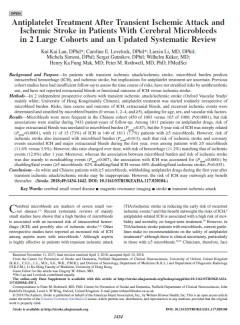
Antiplatelet Treatment After Transient Ischemic Attack and Ischemic Stroke in…
In patients with transient ischemic attack/ischemic stroke, microbleed burden predicts intracerebral hemorrhage (ICH), and ischemic stroke, but implications for antiplatelet treatment are uncertain. Previous cohort studies have had insufficient follow-up to assess the time course of risks, have not stratified risks by antithrombotic use, and have not reported extracranial bleeds or functional o…
- Edition
- -
- ISBN/ISSN
- -
- Collation
- -
- Series Title
- -
- Call Number
- -
Oral antiplatelet therapy for acute ischaemic stroke (Review)
In people with acute ischaemic stroke, platelets become activated and can cause blood clots to form and block an artery in the brain, resulting in damage to part of the brain. Such damage gives rise to the symptoms of stroke. Antiplatelet therapy might reduce the volume of brain damaged by ischaemia and also reduce the risk of early recurrent ischaemic stroke, thereby reducing the risk of ear…
- Edition
- -
- ISBN/ISSN
- -
- Collation
- -
- Series Title
- -
- Call Number
- -
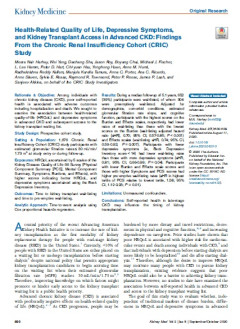
Health-Related Quality of Life, Depressive Symptoms, and Kidney Transplant Ac…
Among individuals with chronic kidney disease (CKD), poor self-reported health is associated with adverse outcomes including hospitalization and death. We sought to examine the association between health-related quality-of-life (HRQoL) and depressive symptoms in advanced CKD and subsequent access to the kidney transplant waiting list.
- Edition
- -
- ISBN/ISSN
- -
- Collation
- -
- Series Title
- -
- Call Number
- -
 Computer Science, Information & General Works
  Philosophy & Psychology
  Religion
  Social Sciences
  Language
  Pure Science
  Applied Sciences
  Art & Recreation
  Literature
  History & Geography