Filter by
PCOS: update and diagnostic approach
Polycystic ovary syndrome (PCOS) is a complex endocrine disorder, commonly diagnosed in reproductive age women. Its estimated prevalence ranges between 5% and 15% [1, 2]. It is often associated with infertility as well as a higher risk of obesity, dyslipidaemia, and detrimental long-term consequences such as type 2 diabetes and cardiovascular disease.
- Edition
- -
- ISBN/ISSN
- -
- Collation
- -
- Series Title
- -
- Call Number
- -
Clinical risk factors for pre-eclampsia determined in early pregnancy: system…
To develop a practical evidence based list of clinical risk factors that can be assessed by a clinician at ≤16 weeks’ gestation to estimate a woman’s risk of pre-eclampsia
- Edition
- -
- ISBN/ISSN
- -
- Collation
- -
- Series Title
- -
- Call Number
- -
The association between maternal smoking and placenta abruption: a meta-analysis
Several epidemiological studies have determined that maternal smoking can increase the risk of placenta abruption. To date, only a meta-analysis has been performed for assessing the relationship between smoking and placenta abruption. This meta-analysis was conducted to estimate the association between smoking and the risk of placenta abruption
- Edition
- -
- ISBN/ISSN
- -
- Collation
- -
- Series Title
- -
- Call Number
- -
Placenta abruption surface and perinatal outcome
This prospective descriptive study was carried out from February 1st to September 30th, 2014. We recruited all women whose delivery was complicated by PA with onset preceded by the presence of active fetal movement. PA surface was assessed by placental examination after delivery. Main outcome measures were gestational age, Apgar score, location and percentage of PA. Data were analyzed using SPS…
- Edition
- -
- ISBN/ISSN
- -
- Collation
- -
- Series Title
- -
- Call Number
- -
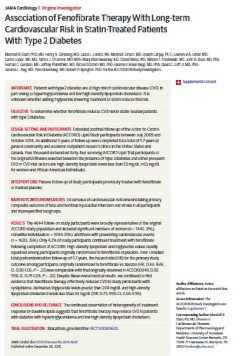
Association of Fenofibrate Therapy With Long-term Cardiovascular Risk in Stat…
Patients with type 2 diabetes are at high risk of cardiovascular disease (CVD) in part owing to hypertriglyceridemia and low high-density lipoprotein cholesterol. It is unknown whether adding triglyceride-lowering treatment to statin reduces this risk.
- Edition
- -
- ISBN/ISSN
- -
- Collation
- -
- Series Title
- -
- Call Number
- -
The pregnant woman with heart disease: management of pregnancy and delivery
Women with heart disease are at risk of cardiac complications during pregnancy and delivery. Risk assessment should be performed in these women, and the management of pregnancy and delivery should be planned accordingly. Depending on the risk, women should be cared for in specialised centres, regional centres or a combination of both. Multidisciplinary teams must be involved in the care of th…
- Edition
- -
- ISBN/ISSN
- -
- Collation
- -
- Series Title
- -
- Call Number
- -
Polycystic ovary syndrome: definition, aetiology, diagnosis and treatment
Polycystic ovary syndrome (PCOS) is one of the most common endocrine and metabolic disorders in premenopausal women. Heterogeneous by nature, PCOS is defined by a combination of signs and symptoms of androgen excess and ovarian dysfunction in the absence of other specific diagnoses. The aetiology of this syndrome remains largely unknown, but mounting evidence suggests that PCOS might be a comp…
- Edition
- -
- ISBN/ISSN
- -
- Collation
- -
- Series Title
- -
- Call Number
- -
Obstetric Emergencies : Shoulder Dystocia and Postpartum Hemorrhage
Shoulder dystocia and postpartum hemorrhage represent two of the most common emergencies faced in obstetric clinical practice, both requiring prompt recognition and management in order to avoid significant morbidity or mortality. Although certain risks for shoulder dystocia and postpartum hemorrhage exist, many cases occur in the absence of these factors. Early identification, communication, an…
- Edition
- -
- ISBN/ISSN
- -
- Collation
- -
- Series Title
- -
- Call Number
- -
Eclampsia in Finland; 2006 to 2010
Eclampsia is a rare but serious threat to maternal and fetal wellbeing. Magnesium sulfate was introduced in Finland as management of eclampsia in the late 1990s. The aim of this study was to assess the incidence of eclampsia in Finland after the increased use of magnesium sulfate.
- Edition
- -
- ISBN/ISSN
- -
- Collation
- -
- Series Title
- -
- Call Number
- -
Trends in the research profile of matched independent plastic surgery fellows
The independent plastic surgery pathway recruits candidates with 5 years of surgical training who are typically more advanced in research than their integrated counterparts. Research productivity helps to discriminate between applicants. However, no studies exist detailing the academic attributes of matched independent plastic surgery candidates. We performed a cohort study of 161 independen…
- Edition
- -
- ISBN/ISSN
- -
- Collation
- -
- Series Title
- -
- Call Number
- -
 Computer Science, Information & General Works
  Philosophy & Psychology
  Religion
  Social Sciences
  Language
  Pure Science
  Applied Sciences
  Art & Recreation
  Literature
  History & Geography