Filter by
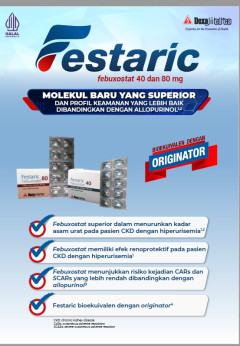
Comparison of uric acid reduction and renal outcomes of febuxostat vs allopur…
Whether the clinical trial treatment effect of urate-lowering therapy (ULT) in patient with chronic kidney disease (CKD) is generalizable to real-word settings is unclear. This study aimed to compare febuxostat with allopurinol for uric acid reduction and renal protection in patients with CKD. Adult CKD patients newly treated with ULT were identified using electronic health records from 2010 to…
- Edition
- -
- ISBN/ISSN
- -
- Collation
- -
- Series Title
- -
- Call Number
- -
Comparison between febuxostat and allopurinol uric acid-lowering therapy in p…
Heart failure (HF) is a common and highly morbid cardiovascular disorder. Oxidative stress worsens HF, and uric acid (UA) is a useful oxidative stress marker. The novel antihyperuricemic drug febuxostat is a potent non-purine selective xanthine oxidase inhibitor. The present study examined the UA-lowering and prognostic effects of febuxostat in patients with HF compared with conventional allop…
- Edition
- -
- ISBN/ISSN
- -
- Collation
- -
- Series Title
- -
- Call Number
- -
Efficacy and safety of urate-lowering treatments in patients with hyperuricem…
What is known and objective: Hyperuricemia (HUA) and gout are considerable public health problems because of their increasing incidence and interactions with other diseases. We aimed to evaluate the efficacy and safety of urate-lowering therapies (ULTs) for patients.
- Edition
- -
- ISBN/ISSN
- -
- Collation
- -
- Series Title
- -
- Call Number
- -
Comparative effectiveness of urate lowering with febuxostat versus allopurino…
To assess the comparative effectiveness of febuxostat and allopurinol in reducing serum urate (sUA) levels in a real-world U.S. managed care setting.
- Edition
- -
- ISBN/ISSN
- -
- Collation
- -
- Series Title
- -
- Call Number
- -
Effects of febuxostat on renal function in patients with chronic kidney disea…
Hyperuricemia has been proven to be an independent risk factor for chronic kidney disease (CKD). However, the role of hyperuricemia in the progression of CKD remains unclear. Thus, we performed a systematic review and metaanalysis to evaluate the efficacy and safety of febuxostat, a first line urate-lowering agent, in CKD patients with hyperuricemia
- Edition
- -
- ISBN/ISSN
- -
- Collation
- -
- Series Title
- -
- Call Number
- -
Renal safety and urate-lowering efficacy of febuxostat in gout patients with …
The safety and efficacy of febuxostat in patients with stage 4–5 chronic kidney disease (CKD) are still unclear owing to a lack of studies in these patients. Therefore, we aimed to evaluate the effect of febuxostat on renal function, general safety, and efficacy in gout patients with stage 4–5 CKD
- Edition
- -
- ISBN/ISSN
- -
- Collation
- -
- Series Title
- -
- Call Number
- -
Risk of cutaneous adverse reactions associated with allopurinol or febuxostat…
Allopurinol carries a well‐known risk of cutaneous adverse reactions (CARs). Although febuxostat, a xanthine‐oxidase inhibitor with different chemical structure, has been considered an alternative to allopurinol, post‐marketing case reports of life‐ threatening febuxostat‐related CARs have been reported. We aimed to compare the risk of CARs between allopurinol and febuxostat in real 
- Edition
- -
- ISBN/ISSN
- -
- Collation
- -
- Series Title
- -
- Call Number
- -
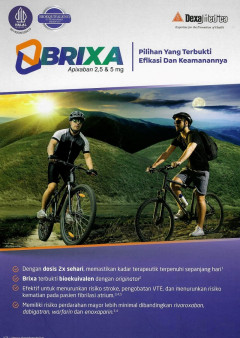
Effectiveness and Safety of Four Direct Oral Anticoagulants in Asian Patients…
Edoxaban, apixaban, and rivaroxaban were associated with a lower risk of ischemic stroke/systemic embolism than warfarin. All DOACs had a lower risk of major bleeding than warfarin. Apixaban was associated with a lower risk of major bleeding than rivaroxaban and dabigatran, whereas the risk ofmajor bleeding was comparable between edoxaban and apixaban. The reduced risks of thromboembolism/majo…
- Edition
- -
- ISBN/ISSN
- -
- Collation
- -
- Series Title
- -
- Call Number
- -
Importance of Pharmacokinetic Profile and Variability as Determinants of Dose…
Warfarin has been the mainstay oral anticoagulant (OAC) medication prescribed for stroke prevention in atrial fibrillation (AF) patients. However, warfarin therapy is challenging because of marked interindividual variability in dose and response, requiring frequent monitoring and dose titration. These limitations have prompted the clinical development of new OACs (NOACs) that directly target t…
- Edition
- -
- ISBN/ISSN
- -
- Collation
- -
- Series Title
- -
- Call Number
- -
Effect of Apixaban on All-Cause Death in Patients with Atrial Fibrillation: a…
In these meta-analyses, a lower rate of death was seen both with warfarin (odds ratio [OR] 0.74, 95% confidence interval [CI] 0.57–0.97) and aspirin (OR 0.86, 95% CI 0.69–1.07) versus placebo/no treatment. Using data from ARISTOTLE and AVERROES, apixaban reduced the risk of death by 34% (95% CI 12–50%; p = 0.004) and 33% (95% CI 6–52%; p = 0.02), respectively, when compared with an i…
- Edition
- -
- ISBN/ISSN
- -
- Collation
- -
- Series Title
- -
- Call Number
- -
 Computer Science, Information & General Works
  Philosophy & Psychology
  Religion
  Social Sciences
  Language
  Pure Science
  Applied Sciences
  Art & Recreation
  Literature
  History & Geography