Filter by
Medication compliance and clinical outcomes of fixed-dose combinations vs fre…
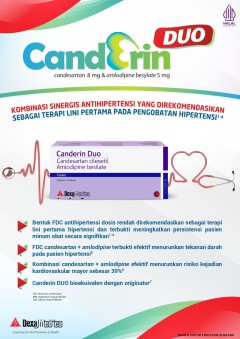
Using the National Health Insurance Research Database of Taiwan, the authors identified 1136 patients taking fixed-dose combination and 4544 patients taking free com‐ binations of an angiotensin II receptor blocker and a dihydropyridine calcium channel blocker from January 2009 to December 2012. At a mean follow-up of 2.1 years, the fixed-dose combination was associated with improved medica…
- Edition
- -
- ISBN/ISSN
- -
- Collation
- -
- Series Title
- -
- Call Number
- -
Effect of Amlodipine + Candesartan on Cardiovascular Events in Hypertensive P…
Combination therapy with calcium channel blockers and angiotensin II receptor blockers is recommended as one of the effective therapies for hypertension. However, it remains unclear whether this combination reduces major adverse cardiovascular events (MACEs) in patients with hypertension with coronary artery disease (CAD). The purpose of the present study was to examine the effects of amlod…
- Edition
- -
- ISBN/ISSN
- -
- Collation
- -
- Series Title
- -
- Call Number
- -
Konsensus penatalaksanaan hipertensi: update konsensus PERHI 2019
Hipertensi merupakan masalah kesehatan global berakibat peningkatan angka kesakitan dan kematian serta beban biaya kesehatan termasuk di Indonesia. Hipertensi merupakan faktor risiko terhadap kerusakan organ penting seperti otak, jantung, ginjal, retina, pembuluh darah besar (aorta) dan pembuluh darah perifer. Riset Kesehatan Dasar (Riskesdas) tahun 2018 menunjukkan peningkatan prevalensi hip…
- Edition
- -
- ISBN/ISSN
- -
- Collation
- -
- Series Title
- -
- Call Number
- -

Acute Bronchial Asthma
Acute asthma is the third commonest cause of pediatric emergency visits at PGIMER. Typically, it presents with acute onset respiratory distress and wheeze in a patient with past or family history of similar episodes. The severity of the acute episode of asthma is judged clinically and categorized asmild, moderate and severe. The initial therapy consists of oxygen, inhaled beta-2 agonists (salbu…
- Edition
- -
- ISBN/ISSN
- -
- Collation
- -
- Series Title
- -
- Call Number
- -
The Role of Budesonide in Adults and Children with Mild-to-Moderate Persisten…
Asthma, a chronic and potentially life-threatening disease of the airways, affects patients of all ages. Inhaled corticosteroids (ICS) are the recommended first-line therapy for patients with persistent asthma. To review the clinical efficacy and tolerability data available on budesonide in the treatment of mild-to-moderate persistent asthma, a MEDLINE database search was performed for 1996–2…
- Edition
- -
- ISBN/ISSN
- -
- Collation
- -
- Series Title
- -
- Call Number
- -
Efficacy of Budesonide in Moderate to Severe Asthma
The worldwide prevalence of asthma is increasing by -50% per decade. Budesonide is one of several inhaled corticosteroids available for the treatment of asthma and has been extensively evaluated in clinical trials
- Edition
- -
- ISBN/ISSN
- -
- Collation
- -
- Series Title
- -
- Call Number
- -
Inhaled budesonide in the management of acute worsenings and exacerbations of…
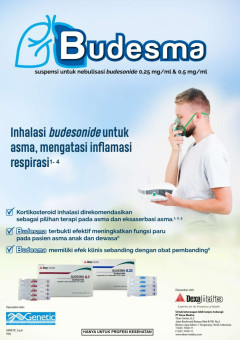
The use of systemic corticosteroids, together with bronchodilators and oxygen therapy, has become established for the management of acute asthma. These agents are undoubtedly effective, but are also associated with problems such as metabolic adverse effects. Inhaled corticosteroids (ICS) offer potential benefit in the acute setting because they are delivered directly to the airways. They are al…
- Edition
- -
- ISBN/ISSN
- -
- Collation
- -
- Series Title
- -
- Call Number
- -
A Review on the Safety and Efficacy of Inhaled Corticosteroids in the Managem…
Asthma is a chronic inflammatory disease characterized by symptoms of cough, dyspnea, chest tightness, and wheeze. Inhaled corticosteroids (ICS) have been recommended as initial therapy in the treatment of persistent asthma in all guidelines, as they have been shown to reduce morbidity and mortality
- Edition
- -
- ISBN/ISSN
- -
- Collation
- -
- Series Title
- -
- Call Number
- -
Short-term and long-term safety of budesonide inhalation suspension in infant…
This article reviews the short-term and long-term safety profile of budesonide inhalation suspension (BIS) for nebulization in infants and young children with persistent asthma.
- Edition
- -
- ISBN/ISSN
- -
- Collation
- -
- Series Title
- -
- Call Number
- -
The Inhaled Steroid Treatment As Regular Therapy in Early Asthma (START) stud…
The Inhaled Steroid Treatment as Regular Therapy in Early Asthma (START) study enrolled 7241 patients aged 5 to 66 years with recent-onset, mild persistent asthma to assess early intervention with the inhaled corticosteroid budesonide on long-term asthma control.
- Edition
- -
- ISBN/ISSN
- -
- Collation
- -
- Series Title
- -
- Call Number
- -
 Computer Science, Information & General Works
  Philosophy & Psychology
  Religion
  Social Sciences
  Language
  Pure Science
  Applied Sciences
  Art & Recreation
  Literature
  History & Geography