Filter by

Granisetron: An Update on its Clinical Use in the Management of Nausea and Vo…
Nausea and vomiting are typical side effects of cytotoxic therapy and some surgical procedures. These symptoms can represent a major therapeutic challenge and, if inadequately controlled by antiemetic treatment, will result in increased mortality, morbidity, and health care costs.
- Edition
- -
- ISBN/ISSN
- -
- Collation
- -
- Series Title
- -
- Call Number
- -
The role of 5-HT3 receptor antagonists in preventing postoperative nausea and…
Postoperative nausea and vomiting (PONV) is a frequent complication of surgery. Guidelines recommend using a 5-HT3 receptor antagonist (eg, ondansetron, dolasetron, granisetron) combined with a second agent (eg, dexamethasone) for patients at moderate to high risk for PONV. Although all 5-HT3 antagonists are effective, ondansetron and granisetron have been found to be effective at substantially…
- Edition
- -
- ISBN/ISSN
- -
- Collation
- -
- Series Title
- -
- Call Number
- -
Comparison of Efficacy of Granisetron and Promethazine in Control of Hypereme…
Hyperemesis gravidarum is the third leading cause of hospitalization during pregnancy. 5-HT3-receptor antagonists are the most effective against chemotherapy-induced nausea and vomiting and radiation. This randomized study aimed to compare and evaluate the efficacies of granisetron and promethazine for controlling nausea and vomiting of pregnancy
- Edition
- -
- ISBN/ISSN
- -
- Collation
- -
- Series Title
- -
- Call Number
- -

Influence of oral antidiabetic drug compliance on metabolic control in type 2…
To address compliance with oral antidiabetic agents and its impact on metabolic control in type 2 diabetic patients treated in general practice.
- Edition
- -
- ISBN/ISSN
- -
- Collation
- -
- Series Title
- -
- Call Number
- -
Gastrointestinal tolerability of extended-release metformin tablets compared …
Metformin, a biguanide antihyperglycemic medication, lowers blood glucose in patients with type 2 diabetes with minimal risk of hypoglycemia. Most common side effects include diarrhea, nausea and vomiting. Extended-release metformin (Glucophage XR)*, a once-daily tablet using the patented GelShield Diffusion System release mechanism, may be better tolerated than immediate-release metformin (Glu…
- Edition
- -
- ISBN/ISSN
- -
- Collation
- -
- Series Title
- -
- Call Number
- -
Efficacy dose response relationship and safety of once-daily extended-release…
The efficacy, dose–response relationships and safety of an extended-release formulation of metformin (Glucophage1 XR) were evaluated in two double-blind, randomized, placebo-controlled studies of 24 and 16 weeks’ duration, in patients with inadequate glycaemic control despite diet and exercise. Protocol 1 provided an evaluation of metformin XR at a commonly used dosage. Protocol 2 evalua…
- Edition
- -
- ISBN/ISSN
- -
- Collation
- -
- Series Title
- -
- Call Number
- -
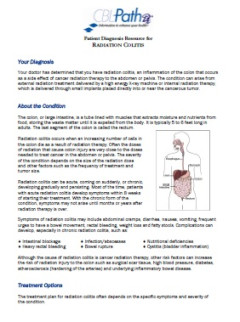
Patient Diagnosis Resource for RADIATION COLITIS
Your doctor has determined that you have radiation colitis, an inflammation of the colon that occurs as a side effect of cancer radiation therapy to the abdomen or pelvis. The condition can arise from external radiation treatment delivered by a high energy X-ray machine or internal radiation therapy, which is delivered through small implants placed directly into or near the cancerous tumor
- Edition
- -
- ISBN/ISSN
- -
- Collation
- -
- Series Title
- -
- Call Number
- -

Newly diagnosed and relapsed epithelial ovarian carcinoma: ESMO Clinical Prac…
Ovarian cancer is predominantly a disease of older, postmenopausal women with the majority (>80%) of cases being diagnosed in women over 50 years.
- Edition
- -
- ISBN/ISSN
- -
- Collation
- -
- Series Title
- -
- Call Number
- -
Metastatic non-small-cell lung cancer (NSCLC): ESMO Clinical Practice Guideli…
Primary lung cancer is the most common malignancy after nonmelanocytic skin cancer with deaths from lung cancer exceeding those from any other type of malignancy worldwide
- Edition
- -
- ISBN/ISSN
- -
- Collation
- -
- Series Title
- -
- Call Number
- -

Towards an Optimized Fetal DHA Accretion: Differences on Maternal DHA Supplem…
Docosahexaenoic acid (DHA) supplementation during pregnancy has been recommended by several health organizations due to its role in neural, visual, and cognitive development. There are several fat sources available on the market for the manufacture of these dietary supplements with DHA. These fat sources differ in the lipid structure in which DHA is esterified, mainly phospholipids (PL) and tri…
- Edition
- -
- ISBN/ISSN
- -
- Collation
- -
- Series Title
- -
- Call Number
- -
 Computer Science, Information & General Works
  Philosophy & Psychology
  Religion
  Social Sciences
  Language
  Pure Science
  Applied Sciences
  Art & Recreation
  Literature
  History & Geography