Filter by

Wound healing
Wound healing is an important physiological process to maintain the integrity of skin after trauma, either by accident or by intent procedure. The normal wound healing involves three successive but overlapping phases, including hemostasis/inflammatory phase, proliferative phase, and remodeling phase. Aberration of wound healing, such as excessive wound healing (hypertrophic scar and keloid) o…
- Edition
- -
- ISBN/ISSN
- -
- Collation
- -
- Series Title
- -
- Call Number
- -
GYNECOLOGY: Variation in Gynecologic Aseptic Technique
There are limited data available regarding the optimal protocol for preoperative skin asepsis and the steps of intraoperative patient preparation including draping, Foley, and uterine manipulator placement. Given the lack of a standard process, it is anticipated that these steps are performed in a variety of sequences
- Edition
- -
- ISBN/ISSN
- -
- Collation
- -
- Series Title
- -
- Call Number
- -
Innate, innate-like and adaptive lymphocytes in the pathogenesis of MS and EAE
Multiple sclerosis (MS) is a chronic inflammatory disease of the central nervous system (CNS) in which the immune system damages the protective insulation surrounding the nerve fibers that project from neurons. A hallmark of MS and its animal model, experimental autoimmune encephalomyelitis (EAE), is autoimmunity against proteins of the myelin sheath. Most studies in this field have focused …
- Edition
- -
- ISBN/ISSN
- -
- Collation
- -
- Series Title
- -
- Call Number
- -
Suprachoroidal Space Triamcinolone Acetonide: A Review in Uveitic Macular Edema
Triamcinolone acetonide injectable suspension for suprachoroidal use (Xipere ® ; SCS triamcinolone acetonide) is a cor- ticosteroid approved in the USA for the treatment of macular edema associated with uveitis. Suprachoroidal injection of SCS triamcinolone acetonide results in preferential distribution into the posterior segment, which may reduce the risk of corticosteroid-related adverse …
- Edition
- -
- ISBN/ISSN
- -
- Collation
- -
- Series Title
- -
- Call Number
- -
Safety and Systemic Exposure of Triamcinolone Acetonide Following Ultrasoundâ…
Osteoarthritis (OA) is a major public health burden. While knee and hip joints are most com- monly affected, the glenohumoral (shoulder) joint is also frequently involved. We evaluated the pharmacokinetics and safety/ tolerability of triamcinolone acetonide extended-release (TA-ER) and triamcinolone acetonide crystalline suspension (TAcs) in patients with shoulder OA.
- Edition
- -
- ISBN/ISSN
- -
- Collation
- -
- Series Title
- -
- Call Number
- -
Efficacy of different routes of triamcinolone acetonide administration on mac…
There is different administration routes of triamcinolone acetonide (TA) administration for macular edema, but the efficacy ranking remains unclear. The purpose of this study is to assess the efficacy of different administration routes of TA employed in macular edema. PubMed, Medline, Embase, and Cochrane Central Register of Controlled Trials were systematically searched for published articles…
- Edition
- -
- ISBN/ISSN
- -
- Collation
- -
- Series Title
- -
- Call Number
- -
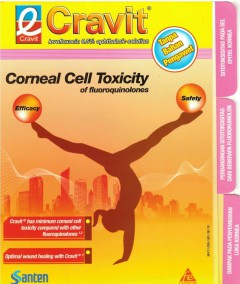
Comparison of fluoroquinolones: cytotoxicity on human corneal epithelial cells
To compare the cytotoxicity of different fluoroquinolones (FQs) towards human corneal epithelial cells (HCECs).
- Edition
- -
- ISBN/ISSN
- -
- Collation
- -
- Series Title
- -
- Call Number
- -

Meta-analysis on Effectiveness and Safety of Moxifloxacin in Treatment of Mul…
Moxifloxacin, a fourth generation fluoroquinolone, which has good antibacterial activity against both Gram-positive cocci and Gram-negative bacteria. To date, there are no meta-analysis to evaluate the efficacy and safety of moxifloxacin for multidrug resistant tuberculosis (MDR-TB) treatment. This meta-analysis to explore the efficacy and safety of the moxifloxacin in treatment of MDR-TB in ad…
- Edition
- -
- ISBN/ISSN
- -
- Collation
- -
- Series Title
- -
- Call Number
- -
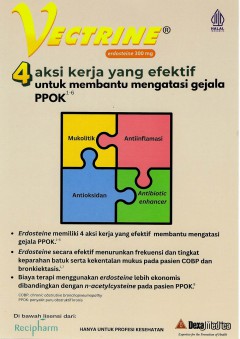
Multifaceted Beneficial Effects of Erdosteine: More than a Mucolytic Agent
Erdosteine is a drug approved for the treatment of acute and chronic pulmonary diseases, originally developed as a mucolytic agent. It belongs to the thiol-based family of drugs that are known to also possess potentially important antioxidant and anti-inflammatory properties, and exhibit antibacterial activity against a variety of medically important bacterial species. Erdosteine is a prodru…
- Edition
- -
- ISBN/ISSN
- -
- Collation
- -
- Series Title
- -
- Call Number
- -

Multifaceted Beneficial Effects of Erdosteine: More than a Mucolytic Agent
Erdosteine is a drug approved for the treatment of acute and chronic pulmonary diseases, originally developed as a mucolytic agent. It belongs to the thiol-based family of drugs that are known to also possess potentially important antioxidant and anti-inflammatory properties, and exhibit antibacterial activity against a variety of medically important bacterial species. Erdosteine is a prodru…
- Edition
- -
- ISBN/ISSN
- -
- Collation
- -
- Series Title
- -
- Call Number
- -
 Computer Science, Information & General Works
  Philosophy & Psychology
  Religion
  Social Sciences
  Language
  Pure Science
  Applied Sciences
  Art & Recreation
  Literature
  History & Geography