Filter by
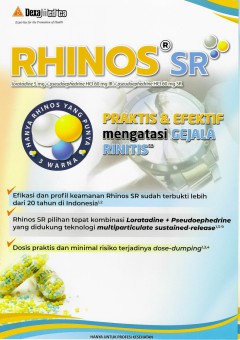
Efficacy of Loratadine Compared with Fexofenadine or Placebo for the Treatmen…
Compared with placebo, both loratadine and fexofenadine provided significant relief of the symptoms of SAR. At the first assessment following the first dose, however, loratadine demonstrated a significant reduction from baseline in TSS compared with fexofenadine. In addition, time-to-event analysis indicated that the reduction in symptoms occurred significantly earlier with loratadine
- Edition
- -
- ISBN/ISSN
- -
- Collation
- -
- Series Title
- -
- Call Number
- -
Allergic rhinitis and asthma: How important is the link?
Dysfunction of the upper and lower airways frequently coexist, and they appear to share key elements of pathogenesis. Data from epidemiologic studies indicate that nasal symptoms are experienced by as many as 78% of patients with asthma and that asthma is experienced by as many as 38% of patients with allergic rhinitis. Studies also have identified a temporal relation between the onset of rh…
- Edition
- -
- ISBN/ISSN
- -
- Collation
- -
- Series Title
- -
- Call Number
- -
Antihistamines General Statement
Antihistamines, which inhibit the effects of histamine at H1 receptors, have been classified as first generation (i.e., relatively sedating) or second generation (i.e., relatively nonsedating).
- Edition
- -
- ISBN/ISSN
- -
- Collation
- -
- Series Title
- -
- Call Number
- -

Sedation with non sedating antihistamines: four non prescription event monito…
To investigate the frequency with whichrnsedation was reported in post?marketing surveillancernstudies of four second generation antihistamines:rnloratadine, cetirizine, fexofenadine, and acrivastine.
- Edition
- -
- ISBN/ISSN
- -
- Collation
- -
- Series Title
- -
- Call Number
- -

Cardiovascular Aspects of Septic Shock: Pathophysiology,Monitoring, and Treat…
Septic shock is one of the most feared medical conditions. Mortality due to severe sepsis is approximately 29%, with 215000 deaths each year (comparable to the number of deaths due to acute myocardial infarction)
- Edition
- -
- ISBN/ISSN
- -
- Collation
- -
- Series Title
- -
- Call Number
- -
Norepinephrine or dopamine for the treatment of hyperdynamic septic shock?
To compare the ability of dopamine and norepinephrine to reverse hemodynamic and metabolic abnormalities of human hyperdynamic septic shock.
- Edition
- -
- ISBN/ISSN
- -
- Collation
- -
- Series Title
- -
- Call Number
- -
Surviving Sepsis Campaign guidelines for management of severe sepsis and sept…
In 2003, critical care and infectious disease experts representing 11 international organizations developed management guidelines for severe sepsis and septic shock that would be of practical use for the bedside clinician, under the auspices of the Surviving Sepsis Campaign, an international effort to increase awareness and improve outcome in severe sepsis
- Edition
- -
- ISBN/ISSN
- -
- Collation
- -
- Series Title
- -
- Call Number
- -
THE SAFETY OF DOPAMINE VERSUS NOREPINEPHRINE AS VASOPRESSOR THERAPY IN SEPTIC…
- Edition
- -
- ISBN/ISSN
- -
- Collation
- -
- Series Title
- -
- Call Number
- -
- Edition
- -
- ISBN/ISSN
- -
- Collation
- -
- Series Title
- -
- Call Number
- -
Safety assessment of omeprazole use: a review
Risks regarding hospital admission due to adverse drug reactions and drug interactions from use of omeprazole have been reported. The question guiding the present review was “Which adverse events occur in patients using omeprazole in a Food and Drug Administration-approved and/or off-label manner?” It was also proposed to evaluate the safety of use of omeprazole
- Edition
- -
- ISBN/ISSN
- -
- Collation
- -
- Series Title
- -
- Call Number
- -
Comparative study of omeprazole, lansoprazole, pantoprazole and esomeprazole …
To clarify whether there is any difference in the symptom relief in patients with reflux esophagitis following the administration of four Proton pump inhibitors (PPIs).
- Edition
- -
- ISBN/ISSN
- -
- Collation
- -
- Series Title
- -
- Call Number
- -
 Computer Science, Information & General Works
  Philosophy & Psychology
  Religion
  Social Sciences
  Language
  Pure Science
  Applied Sciences
  Art & Recreation
  Literature
  History & Geography