Filter by
Switch over from intravenous to oral therapy: A concise overview
Majority of the patients admitted to a hospital with severe infections are initially started with intravenous medications. Short intravenous course of therapy for 2-3 days followed by oral medications for the remainder of the course is found to be beneficial to many patients. This switch over from intravenous to oral therapy is widely practiced in the case of antibiotics in many developed count…
- Edition
- -
- ISBN/ISSN
- -
- Collation
- -
- Series Title
- -
- Call Number
- -
A Randomized Controlled Trial of Glycyrrhizin Plus Tenofovir vs. Tenofovir in…
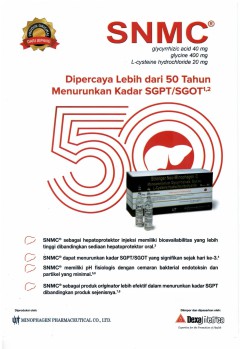
Severe acute exacerbation (SAE) of chronic hepatitis B (CHB) may progress to liver failure with high potential mortality despite the prompt treatment with nucleos(t)ide analogs. This study aimed to evaluate the efficacy and safety of glycyrrhizin in the treatment of CHB with SAE.
- Edition
- -
- ISBN/ISSN
- -
- Collation
- -
- Series Title
- -
- Call Number
- -
BSACI guideline for the diagnosis and management of allergic and non-allergic…
This is an updated guideline for the diagnosis and management of allergic and non-allergic rhinitis, first published in 2007. It was produced by the Standards of CareCommittee of the British Society of Allergy and Clinical Immunology, using accre-dited methods. Allergic rhinitis is common and affects 10–15% of children and 26%of adults in the UK, it affects quality of life, school and work at…
- Edition
- -
- ISBN/ISSN
- -
- Collation
- -
- Series Title
- -
- Call Number
- -

The Clinical Pharmacology of Non-sedating Antihistamines
We previously reported on brain H1 receptor occupancy measurements of antihistamines in human brain using [11C]doxepin and positron emission tomography (PET). We proposed the use of brain H1 receptor occupancy to classify antihistamines objectively into three categories of sedating, less-sedating, and non-sedating antihistamines according to their sedative effects. Non-sedating antihistamines a…
- Edition
- -
- ISBN/ISSN
- -
- Collation
- -
- Series Title
- -
- Call Number
- -
Efficacy and safety of fexofenadine hydrochloride for treatment of seasonal a…
H1-receptor antagonists are effective for the treatment of seasonal allergic rhinitis. In rare circumstances, some second-generation H1-receptor antagonists have been associated with prolongation of the corrected QT interval (QTc), thus increasing the risk of ventricular arrhythmias. Fexofenadine HCl, the carboxylic acid metabolite of terfenadine, is a new second-generation antihistamine that i…
- Edition
- -
- ISBN/ISSN
- -
- Collation
- -
- Series Title
- -
- Call Number
- -

Efficacy and safety of loratadine plus pseudoephedrine in patients with seaso…
Antihistamines have been shown to have a varietyrnof therapeutic effects in asthma. Although nasal obstructionrnmay play an important role in modulating lower airwayrnfunction, no prior trial has used a decongestant in combinationrnwith an antihistamine in patients with allergic rhinitisrnand concomitant asthma.
- Edition
- -
- ISBN/ISSN
- -
- Collation
- -
- Series Title
- -
- Call Number
- -
The efficacy of Rhinos® SR on nasal resistance and nasal symptoms in patient…
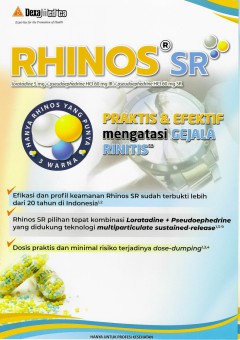
Rhinos® SR is a fixed combination of 5 mg loratadine and 60 mg pseudoephedrine immediate release and 60 mg pseudoephedrine sustained release. The present study was aimed to assess the efficacy of Rhinos® SR on nasal airway resistance (NAR) objectively using rhinomanometer and on nasal symptoms in patients with perennial allergic rhinitis (PAR) in a tropical country. This was a randomized, dou…
- Edition
- -
- ISBN/ISSN
- -
- Collation
- -
- Series Title
- -
- Call Number
- -
Teknologi Sediaan Farmasi : Sustained-Release Oral
Penanganan penyakit menggunakan obat (drug treatment) merupakan bentuk terapi yang paling umum digunakan. Therapeutic efficacy obat dalam penggunaan klinis tidak hanya tergantung dari intrinsic pharmacologic activity bahan aktifnya, melainkan juga ditentukan oleh interaksi molekul obat dengan berbagai kondisi selama perjalanannya dari tempat pemberian menuju tempat kerjanya
- Edition
- -
- ISBN/ISSN
- -
- Collation
- -
- Series Title
- -
- Call Number
- -
Loratadine Versus Cetirizine: Assessment of Somnolence and Motivation During …
This parallel-group, double-blind study compared the somnolence and motivation profiles of 2 second-generation antihistamines, loratadine and cetirizine, in pattents with allergic rhinitis.
- Edition
- -
- ISBN/ISSN
- -
- Collation
- -
- Series Title
- -
- Call Number
- -
Bioequivalence Study of Modified Release Formulation (MRF) of Loratadine and …
The present study was conducted to find out whether the bioavailability of PT Dexa Medica’s modified-release formulation (MRF) of pseudoephedrine and loratadine fixed combination (Rhinos®SR) was comparable to that produced by the reference’s company. The pharmacokinetic parameters assessed in this study were area under the serum concentration - time curve during one dosing interval (AUC0-1…
- Edition
- -
- ISBN/ISSN
- -
- Collation
- -
- Series Title
- -
- Call Number
- -
 Computer Science, Information & General Works
  Philosophy & Psychology
  Religion
  Social Sciences
  Language
  Pure Science
  Applied Sciences
  Art & Recreation
  Literature
  History & Geography