Filter by

Back to the Future: Using Aminoglycosides Again and How to Dose Them Optimally
Gram-negative organisms have become increasingly resistant to both b-lactam antibiotics and fluoroquinolones. Consequently, aminoglycoside antibiotics have undergone a resurgence in use. Because of the known toxicities of aminoglycoside antibiotics, clinicians have avoided their use, unless no other alternatives were extant. Over the past 2 decades, we have learned much about the relationship …
- Edition
- -
- ISBN/ISSN
- -
- Collation
- -
- Series Title
- -
- Call Number
- -
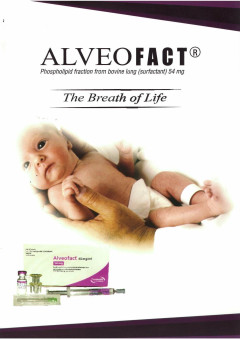
The choice of surfactant for treatment of respiratory distress syndrome in pr…
There are many clinical trials of surfactant therapy in newborn babies, but making valid comparisons between surfactant preparations is problematic due to the different doses, volumes and treatment schedules used. This article reviews the evidence available from clinical trials comparing different surfactant preparations and describes a meta-analysis of three randomised, controlled trials comp…
- Edition
- -
- ISBN/ISSN
- -
- Collation
- -
- Series Title
- -
- Call Number
- -
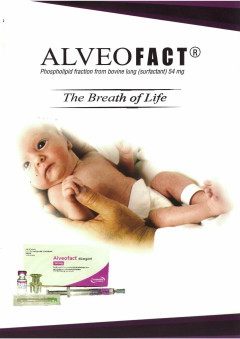
Comparison of three treatment regimens of natural surfactant preparations in …
The aim of the study was to compare the treatment regimen of three natural surfactants of different extraction and formulation (Alveofact [Surfactant A = SA], Poractant [Surfactant B = SB] and Beractant [Surfactant C = SC]) in neonatal respiratory distress syndrome (RDS). Premature infants of £ 32 weeks’ gestation with birth weight of £ 2,000 g and with established RDS requiring artificial…
- Edition
- -
- ISBN/ISSN
- -
- Collation
- -
- Series Title
- -
- Call Number
- -
Surfactant inhibition by plasma proteins: differential sensitivity of various…
Leakage of plasma proteins Into the alveolar space may inhibit surfactant function. We compared the surface properties and the sensitivity to inhlbitory proteins of different organic solvent surfactant extracts and a synthetic surfactant
- Edition
- -
- ISBN/ISSN
- -
- Collation
- -
- Series Title
- -
- Call Number
- -

The SAFE study: saline vs. albumin for fluid resuscitation in the critically ill
The administration of intravenous fluids to maintain or increase intravascular volume is a common intervention in the intensive care unit (ICU). There has been an enduring controversy as to the impact of the choice of resuscitation fluid on patients’ outcomes [1–7]. In particular, there are no adequately powered randomized controlled trials examining the impact of resuscitation fluid cho…
- Edition
- -
- ISBN/ISSN
- -
- Collation
- -
- Series Title
- -
- Call Number
- -
Randomised trials of human albumin for adults with sepsis: systematic review …
In this analysis, human albumin solutions as part of fluid volume expansion and resuscitation for critically unwell adults with sepsis of any severity (with or without baseline hypoalbuminaemia) were not robustly effective at reducing all-cause mortality. Albumin seems to be safe in this setting, as a signal towards harm was not detected, but this analysis does not support a recommendation for use
- Edition
- -
- ISBN/ISSN
- -
- Collation
- -
- Series Title
- -
- Call Number
- -
Albumin administration improves organ function in critically ill hypoalbumine…
Albumin administration may improve organ function in hypoalbuminemic critically ill patients. It results in a less positive fluid balance and a better tolerance to enteral feeding
- Edition
- -
- ISBN/ISSN
- -
- Collation
- -
- Series Title
- -
- Call Number
- -
A paradigm for consensus. The University Hospital Consortium guidelines for t…
The Delphi method, a systematic, literature-based consensus process, was shown to be useful in the development of complex clinical practice guidelines for the use of albumin, nonprotein colloid, and crystalloid solutions. It is anticipated that the guidelines will assist health care providers to develop local institutional policies and procedures for the appropriate and efficient use of albumin…
- Edition
- -
- ISBN/ISSN
- -
- Collation
- -
- Series Title
- -
- Call Number
- -
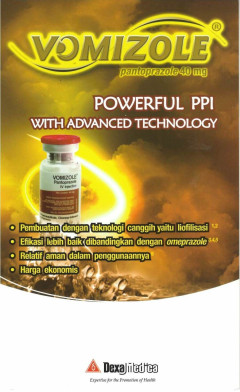
Review article: comparison of the pharmacokinetics, acid suppression and effi…
Proton pump inhibitors have dramatically in¯uenced the management of acid-peptic disorders in recent years. They all have a broadly similar mechanism of action and are extensively metabolized in the liver via cytochromes P450 2C19 and 3A4. There is some variation in their potential for drug interactions due to differences in enzyme inhibition. Relatively few serious adverse effects have been …
- Edition
- -
- ISBN/ISSN
- -
- Collation
- -
- Series Title
- -
- Call Number
- -
 Computer Science, Information & General Works
  Philosophy & Psychology
  Religion
  Social Sciences
  Language
  Pure Science
  Applied Sciences
  Art & Recreation
  Literature
  History & Geography