Filter by

Statin Therapy, LDL Cholesterol, C-Reactive Protein, and Coronary Artery Disease
Recent trials have demonstrated better outcomes with intensive than with moderate statin treatment. Intensive treatment produced greater reductions in both low-density lipoprotein (LDL) cholesterol and C-reactive protein (CRP), suggesting a relationship between these two biomarkers and disease progression
- Edition
- -
- ISBN/ISSN
- -
- Collation
- -
- Series Title
- -
- Call Number
- -
Dose-dependency in pleiotropic effects of atorvastatin
Statins are recognized as the principal and most effective class of drugs for reducing serum cholesterol levels and, therefore, significantly reducing cardiovascular events and mortality. Statins may have a wide range of beneficial biological effects in addition to lipid lowering, a phenomenon commonly termed a ‘pleiotropic effect’. However, the dose-dependency of these effects remains unclear
- Edition
- -
- ISBN/ISSN
- -
- Collation
- -
- Series Title
- -
- Call Number
- -
Active Metabolite of Atorvastatin Inhibits Membrane Cholesterol Domain Format…
The advanced atherosclerotic lesion is characterized by the formation of microscopic cholesterol crystals that contribute to mechanisms of inflammation and apoptotic cell death. These crystals develop from membrane cholesterol domains, a process that is accelerated under conditions of hyperlipidemia and oxidative stress. In this study, the comparative effects of hydroxymethylglutaryl-CoA (HMG-C…
- Edition
- -
- ISBN/ISSN
- -
- Collation
- -
- Series Title
- -
- Call Number
- -
Effect of Very High-Intensity Statin Therapy on Regression of Coronary Athero…
Very high-intensity statin therapy using rosuvastatin 40 mg/d achieved an average LDL-C of 60.8 mg/dL and increased HDL-C by 14.7%, resulting in significant regression of atherosclerosis for all 3 prespecified IVUS measures of disease burden. Treatment to LDL-C levels below currently accepted guidelines, when accompanied by significant HDL-C increases, can regress atherosclerosis in coronary di…
- Edition
- -
- ISBN/ISSN
- -
- Collation
- -
- Series Title
- -
- Call Number
- -
Rosuvastatin in Older Patients with Systolic Heart Failure
Patients with systolic heart failure have generally been excluded from statin trials. Acute coronary events are uncommon in this population, and statins have theoretical risks in these patients
- Edition
- -
- ISBN/ISSN
- -
- Collation
- -
- Series Title
- -
- Call Number
- -
Primary prevention of cardiovascular disease with atorvastatin in type 2 diab…
Type 2 diabetes is associated with a substantially increased risk of cardiovascular disease, but the role of lipid-lowering therapy with statins for the primary prevention of cardiovascular disease in diabetes is inadequately defined. We aimed to assess the effectiveness of atorvastatin 10 mg daily for primary prevention of major cardiovascular events in patients with type 2 diabetes without hi…
- Edition
- -
- ISBN/ISSN
- -
- Collation
- -
- Series Title
- -
- Call Number
- -
Prevention of coronary and stroke events with atorvastatin in hypertensive pa…
The lowering of cholesterol concentrations in individuals at high risk of cardiovascular disease improves outcome. No study, however, has assessed benefits of cholesterol lowering in the primary prevention of coronary heart disease (CHD) in hypertensive patients who are not conventionally deemed dyslipidaemic
- Edition
- -
- ISBN/ISSN
- -
- Collation
- -
- Series Title
- -
- Call Number
- -
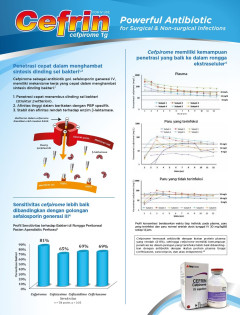
Comparative in-vitro activity of cefpirome againts isolates from intensive ca…
- Edition
- -
- ISBN/ISSN
- -
- Collation
- -
- Series Title
- -
- Call Number
- -
- Edition
- -
- ISBN/ISSN
- -
- Collation
- -
- Series Title
- -
- Call Number
- -
Randomized comparative trial of cefpirome versus ceftazidime in the empirical…
- Edition
- -
- ISBN/ISSN
- -
- Collation
- -
- Series Title
- -
- Call Number
- -
- Edition
- -
- ISBN/ISSN
- -
- Collation
- -
- Series Title
- -
- Call Number
- -
Comparison of Strategies Using Cefpirome and Ceftazidime for Empiric Treatmen…
In an international, multicenter, open-label, randomized comparative study, adult patients in intensive care units were enrolled to receive cefpirome intravenously at 2 g twice daily or ceftazidime intravenously at 2 g three times daily for the empiric treatment of pneumonia. Randomization was performed after a double stratification according to the investigator’s initial choice of monothe…
- Edition
- -
- ISBN/ISSN
- -
- Collation
- -
- Series Title
- -
- Call Number
- -
 Computer Science, Information & General Works
  Philosophy & Psychology
  Religion
  Social Sciences
  Language
  Pure Science
  Applied Sciences
  Art & Recreation
  Literature
  History & Geography