Filter by
Current and new challenges in occupational lung diseases
Occupational lung diseases are an important public health issue and are avoidable through preventive interventions in the workplace. Up-to-date knowledge about changes in exposure to occupational hazards as a result of technological and industrial developments is essential to the design and implementation of efficient and effective workplace preventive measures.
- Edition
- -
- ISBN/ISSN
- -
- Collation
- -
- Series Title
- -
- Call Number
- -
Asthma: definitions and pathophysiology
Asthma is a common condition due to chronic inflammation of the lower respiratory tract. Chronic lower airway inflammation is known to be more common in individuals that also have inflammatory disorders of the upper airway. The scientific understanding of asthma continues to improve and it is important for providers who treat upper or lower airway inflammation to be familiar with asthma’s def…
- Edition
- -
- ISBN/ISSN
- -
- Collation
- -
- Series Title
- -
- Call Number
- -
Asthma and Exercise-Induced Bronchoconstriction in Athletes
Regular exercise is one of the most effective means to maintain good health. A substantial proportion of the general population engages in competitive sports, including many people with asthma; when controlled, asthma does not restrict exercise performance. Indeed, exercise training can improve asthma symptoms, quality of life, exercise capacity, and pulmonary function, as well as reduce airwa…
- Edition
- -
- ISBN/ISSN
- -
- Collation
- -
- Series Title
- -
- Call Number
- -
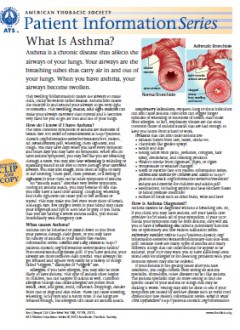
Patient Information Series : What Is Asthma?
Asthma is a chronic disease that affects the airways of your lungs. Your airways are the breathing tubes that carry air in and out of your lungs. When you have asthma, your airways become swollen
- Edition
- -
- ISBN/ISSN
- -
- Collation
- -
- Series Title
- -
- Call Number
- -
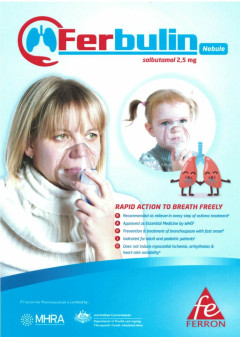
Essential Drugs - practical guidelines
- Edition
- -
- ISBN/ISSN
- -
- Collation
- -
- Series Title
- -
- Call Number
- -
- Edition
- -
- ISBN/ISSN
- -
- Collation
- -
- Series Title
- -
- Call Number
- -
Salbutamol inhalation has no effect on myocardial ischaemia, arrhythmias and …
Inhaled beta-2 agonists raise heart rate, systolic blood pressure and contractility, all of which cause an increase in oxygen consumption of the heart. We performed a study on the influence of inhaled salbutamol on myocardial ischaemia, rhythm, and heart rate variability as assessed by Holter monitoring of 24 patients with coronary artery disease (CAD) and clinically stable asthma
- Edition
- -
- ISBN/ISSN
- -
- Collation
- -
- Series Title
- -
- Call Number
- -
Anaesthesia for ICU-based procedures: the advantages of and options available…
Many patients admitted to an intensive care unit (ICU) will undergo a surgical procedure for correcting the underlying cause of their disease, to deal with the complications of their disease or the treatment of their disease, or to undergo diagnostic procedures which will direct the course of their treatment. The majority of these procedures are performed in the operating theatre, but a small …
- Edition
- -
- ISBN/ISSN
- -
- Collation
- -
- Series Title
- -
- Call Number
- -
GUIDELINES FOR THE PRACTICE OF CRITICAL CARE BY ANESTHESIOLOGISTS
The practice of anesthesiology includes provision of care to patients who are critically ill, while critical care medicine has its foundations in perioperative care provided by anesthesiologists, today’s critical care medicine encompasses care beyond traditional intraoperative and routine postoperative care. Critical care medicine includes a wide variety of clinical services provided by the a…
- Edition
- -
- ISBN/ISSN
- -
- Collation
- -
- Series Title
- -
- Call Number
- -
Comparison of the Analgesic Effect of Sufentanil versus Fentanyl in Intraveno…
Fentanyl is one of the most widely used opioids for intravenous patient-controlled analgesia (IV-PCA). Sufentanil, a fentanyl analog, is suitable for postoperative pain control because it has no active metabolites and shows a higher therapeutic index and lower frequency of respiratory suppression than fentanyl. This study aimed to compare the two opioids for postoperative pain relief on the bas…
- Edition
- -
- ISBN/ISSN
- -
- Collation
- -
- Series Title
- -
- Call Number
- -
Comparison of morphine, meperidine, fentanyl, and sufentanil in balanced anes…
A double-blind study comparing four narcotic analgesics of different potencies, meperidine, morphine, fentanyl, and sufentanil, was performed on consenting patients undergoing general or orthopedic surgery under balanced anesthesia. Blood pressure, measured through an indwelling arterial catheter, was recorded continuously, as were ECG and heart rates. The narcotics, made up in equipotent conce…
- Edition
- -
- ISBN/ISSN
- -
- Collation
- -
- Series Title
- -
- Call Number
- -
 Computer Science, Information & General Works
  Philosophy & Psychology
  Religion
  Social Sciences
  Language
  Pure Science
  Applied Sciences
  Art & Recreation
  Literature
  History & Geography