Filter by

Standardised water-soluble extract of Eurycoma longifolia, Tongkat ali, as te…
In most countries, millions of people are relying on herbal medicines as remedy for numerous ailments. In South-East Asia, Eurycoma longifolia Jack, also known as ‘Malaysian ginseng’ or Tongkat ali, is used to combat stress and disease and to improve physical strength. Moreover, the compounds of the roots of this plant are reported to have aphrodisiac and testosterone enhancing effects in …
- Edition
- -
- ISBN/ISSN
- -
- Collation
- -
- Series Title
- -
- Call Number
- -
Eurycoma Longifolia as a potential adoptogen of male sexual health: a systema…
Eurycoma longifolia (EL) has been well recognized as a booster of male sexual health. Over the past few decades, numerous in vivo animal studies and human clinical trials have been conducted across the globe to explore the promising role of EL in managing various male sexual disorders, which include erectile dysfunction, male infertility, low libido, and downregulated testosterone levels. Th…
- Edition
- -
- ISBN/ISSN
- -
- Collation
- -
- Series Title
- -
- Call Number
- -
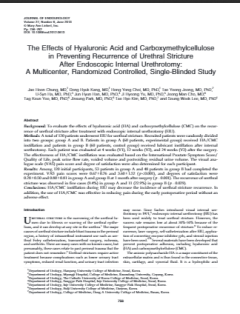
The Effects of Hyaluronic Acid and Carboxymethylcellulose in Preventing Recur…
HA/CMC instillation during EIU may decrease the incidence of urethral stricture recurrence. In addition, the use of HA/CMC was effective in reducing pain during the early postoperative period without an adverse effect.
- Edition
- -
- ISBN/ISSN
- -
- Collation
- -
- Series Title
- -
- Call Number
- -
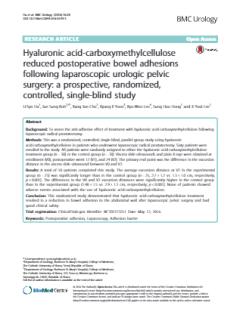
Hyaluronic acid-carboxymethylcellulose reduced postoperative bowel adhesions …
This randomized study demonstrated that hyaluronic acid-carboxymethylcellulose treatment resulted in a reduction in bowel adhesion to the abdominal wall after laparoscopic pelvic surgery and had good clinical safety
- Edition
- -
- ISBN/ISSN
- -
- Collation
- -
- Series Title
- -
- Call Number
- -
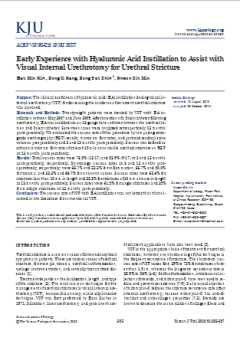
Early Experience with Hyaluronic Acid Instillation to Assist with Visual Inte…
The clinical usefulness of hyaluronic acid (HA) instillation during visual internal urethrotomy (VIU) for decreasing the incidence of recurrent urethral stricture was assessed.
- Edition
- -
- ISBN/ISSN
- -
- Collation
- -
- Series Title
- -
- Call Number
- -
Safety and Efficacy of Gliclazide as Treatment for Type 2 Diabetes: A Systema…
Gliclazide has been associated with a low risk of hypoglycemic episodes and beneficial long-term cardiovascular safety in observational cohorts. The aim of this study was to assess in a systematic review and meta-analysis of randomized controlled trials the safety and efficacy of gliclazide compared to other oral glucose-lowering agents (PROSPERO2013:CRD42013004156)
- Edition
- -
- ISBN/ISSN
- -
- Collation
- -
- Series Title
- -
- Call Number
- -
Efectiveness of gliclazide MR 60 mg in the management of type 2 diabetes: ana…
Although the number of antihyperglycemic agents has expanded signifcantly, sulfonylureas (in particular gliclazide) remain an important option because of a variety of patient and health system factors. The large, real world, observational, and international EASYDia trial evaluated the efectiveness of gliclazide modifed release (MR) 60 mg in individuals with type 2 diabetes with a broad range of…
- Edition
- -
- ISBN/ISSN
- -
- Collation
- -
- Series Title
- -
- Call Number
- -
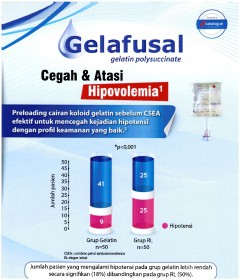
The Effect of In Vitro Hemodilution with Gelatin, Dextran, Hydroxyethyl Starc…
To determine the effects of progressive in vitro hemodilution with various plasma substitutes on whole blood coagulation, blood was obtained from six healthy volunteers. The Thrombelastograph® (TEG; Haemoscope Corp., Morton Grove, IL) variables of reaction time, coagulation time, maximum amplitude, and growth angle were determined. The following plasma substitutes were tested: two gelatin solu…
- Edition
- -
- ISBN/ISSN
- -
- Collation
- -
- Series Title
- -
- Call Number
- -
3.5% urea-linked gelatin is as effective as 6% HES 200/0.5 for volume managem…
To compare the efficacy of volume expansion with 3.5% gelatin and 6% hydroxyethyl starch 200/0.5 in patients undergoing cardiac surgery. The second objective was to compare the two colloids in terms of blood losses and allogeneic blood transfusion exposure rate.
- Edition
- -
- ISBN/ISSN
- -
- Collation
- -
- Series Title
- -
- Call Number
- -
Effects of hydroxyethystarch and gelatin on renal function in severe sepsis: …
- Edition
- -
- ISBN/ISSN
- -
- Collation
- -
- Series Title
- -
- Call Number
- -
- Edition
- -
- ISBN/ISSN
- -
- Collation
- -
- Series Title
- -
- Call Number
- -
 Computer Science, Information & General Works
  Philosophy & Psychology
  Religion
  Social Sciences
  Language
  Pure Science
  Applied Sciences
  Art & Recreation
  Literature
  History & Geography