Filter by

Natural history of motor symptoms in Parkinson’s disease and the long-durat…
The natural pattern of progression of Parkinson’s disease is largely unknown because patients are conventionally followed on treatment. As Parkinson’s disease progresses, the true magnitude of the long-duration response to levodopa remains unknown, because it can only be estimated indirectly in treated patients. We aimed to describe the natural course of motor symptoms by assessing the na…
- Edition
- -
- ISBN/ISSN
- -
- Collation
- -
- Series Title
- -
- Call Number
- -
Levodopa: Past, Present, and Future
Levodopa has been the mainstay of treatment for Parkinson’s disease (PD) for more than 40 years. During this time, researchers have strived to optimize levodopa formulations to minimize side effects, enhance central nervous system (CNS) bioavailability, and achieve stable therapeutic plasma levels
- Edition
- -
- ISBN/ISSN
- -
- Collation
- -
- Series Title
- -
- Call Number
- -
Pharmacokinetics of levodopa
This paper reviews the clinically relevant determinants of levodopa peripheral pharmacokinetics and main observed changes in the levodopa concentration–effect relationship with Parkinson’s disease (PD) progression. Available clinically practical strategies to optimise levodopa pharmacokinetics and pharmacodynamics are briefly discussed
- Edition
- -
- ISBN/ISSN
- -
- Collation
- -
- Series Title
- -
- Call Number
- -
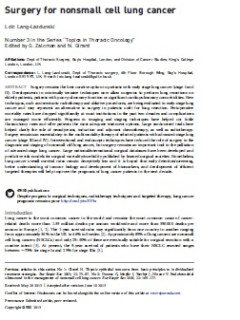
Surgery for nonsmall cell lung cancer
Surgery remains the best curative option in patients with early stage lung cancer (stage I and II). Developments in minimally invasive techniques now allow surgeons to perform lung resections on elderly patients, patients with poor pulmonary function or significant cardiopulmonary comorbidities. New techniques, such as stereotactic radiotherapy and ablative procedures, are being evaluated in ea…
- Edition
- -
- ISBN/ISSN
- -
- Collation
- -
- Series Title
- -
- Call Number
- -
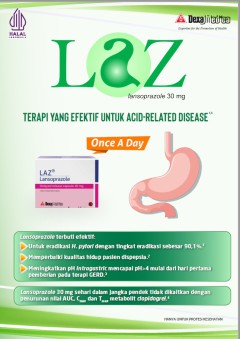
Lansoprazole : In the Treatment of Gastro-oesophageal Reflux Disease in Child…
Lansoprazole was generally well tolerated in children and adolescents, with the most common treatment-related adverse events being gastrointestinal events and headache.
- Edition
- -
- ISBN/ISSN
- -
- Collation
- -
- Series Title
- -
- Call Number
- -
Lansoprazole for Maintenance of Remission of Erosive Oesophagitis
Gastro-oesophageal reflux disease,which is experienced daily by a significant proportion of individuals, may result in serious sequelae such as erosive oesophagitis. Short-term treatment with acid antisecretory therapy (a proton pump inhibitor or a histamine H2 receptor antagonist) is highly effective in healing the erosive oesophagitis lesion. However, numerous studies confirm that unless main…
- Edition
- -
- ISBN/ISSN
- -
- Collation
- -
- Series Title
- -
- Call Number
- -
LANSOPRAZOLE FOR THE PREVENTION OF RECURRENCES OF ULCER COMPLICATIONS FROM LO…
The role of gastric acid suppression in preventing the recurrence of ulcer complications after the eradication of Helicobacter pylori infection in patients taking long-term low-dose aspirin is uncertain
- Edition
- -
- ISBN/ISSN
- -
- Collation
- -
- Series Title
- -
- Call Number
- -
A Comparison of Lansoprazole, Omeprazole, and Ranitidine for Reducing Preoper…
Acid aspiration syndrome at induction of anesthesia is still a potentially life-threatening complication (1). Its severity is a function of both the pH and the volume of the gastric juice aspirated. Many pharmacological attempts, including the use of H2 blockers (2), proton pump inhibitors (PPIs) (3), and antacids (2), have been made to eliminate the risk of pulmonary aspiration by decreasing a…
- Edition
- -
- ISBN/ISSN
- -
- Collation
- -
- Series Title
- -
- Call Number
- -
Eradication Rates for Esomeprazole and Lansoprazole-Based 7-Day Non-Bismuth C…
The eradication rates between esomeprazole and lansoprazole-based nonbismuth concomitant quadruple therapy for first-line H. pylori treatment were similar in this study. Both could achieve a > 90% report card in the PP analysis
- Edition
- -
- ISBN/ISSN
- -
- Collation
- -
- Series Title
- -
- Call Number
- -
Effect of Lansoprazole on the Control of the Intragastric pH in a Patient wit…
A 40-year-old man suffered from short bowel syndrome. Since a large amount of intestinal output and watery diarrhea hampered his quality of life, we tried to control the intestinal output by reducing the secretion of gastric acid with lansoprazole. Because the small intestine was only 10 cm in length and effective absorption of oral lansoprazole was doubtful, we monitored his intragastric pH fo…
- Edition
- -
- ISBN/ISSN
- -
- Collation
- -
- Series Title
- -
- Call Number
- -
 Computer Science, Information & General Works
  Philosophy & Psychology
  Religion
  Social Sciences
  Language
  Pure Science
  Applied Sciences
  Art & Recreation
  Literature
  History & Geography