Filter by
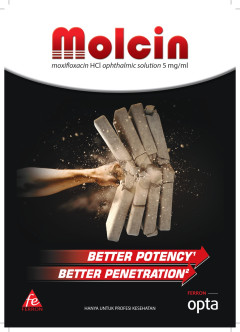
Moxifloxacin: a review of the microbiological, pharmacological, clinical and …
- Edition
- -
- ISBN/ISSN
- -
- Collation
- -
- Series Title
- -
- Call Number
- -
- Edition
- -
- ISBN/ISSN
- -
- Collation
- -
- Series Title
- -
- Call Number
- -
Moxifloxacin
Moxifloxacin (MOXI: 8-methoxy-quinolone), and quinolones in general, exert their effects by trapping a DNA drug enzyme complex and specifically inhibiting ATP-dependent enzymes topoisomerase II (DNA gyrase) and topoisomerase IV.
- Edition
- -
- ISBN/ISSN
- -
- Collation
- -
- Series Title
- -
- Call Number
- -
Community-Acquired Pneumonia Recovery in the Elderly (CAPRIE): Efficacy and S…
Intravenous/oral moxifloxacin therapy was efficacious and safe for hospitalized elderly patients with CAP, achieving 190% cure in all severity and age subgroups, and was associated with faster clinical recovery than intravenous/oral levofloxacin therapy, with a comparable safety profile.
- Edition
- -
- ISBN/ISSN
- -
- Collation
- -
- Series Title
- -
- Call Number
- -
Pharmacokinetics of Moxifloxacin and Levofloxacin in Intensive Care Unit Pati…
Extended daily dialysis (EDD) is increasingly popular in the treatment of acute renal failure (ARF). EDD could remove drugs to a much different degree compared with intermittent standard hemodialysis or continuous renal replacement therapies; however, there are only scarce data on how EDD influences the pharmacokinetics of frequently used drugs. The aim of this study was to determine the pha…
- Edition
- -
- ISBN/ISSN
- -
- Collation
- -
- Series Title
- -
- Call Number
- -
Moxifloxacin versus levofloxacin against acute exacerbations of chronic bronc…
We compared the efficacy and safety of moxifloxacin and levofloxacin for the treatment of patients with acute exacerbations of chronic bronchitis (AECB) using a prospective, randomized, double blind, parallel-group clinical trial design. A total of 563 patients with AECB were enrolled (437 efficacy-valid) at 34 centers in Mexico, Argentina, Brazil, Colombia, and Peru. Patients were randomized t…
- Edition
- -
- ISBN/ISSN
- -
- Collation
- -
- Series Title
- -
- Call Number
- -
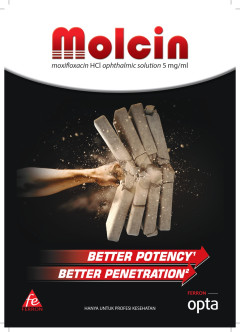
Moxifloxacin Pharmacokinetics, Cardiac Safety, and Dosing for the Treatment o…
Moxifloxacin is a recommended drug for rifampin-resistant tuberculosis (RR-TB) treatment, but there is limited pediatric pharmacokinetic and safety data, especially in young children. We characterize moxifloxacin population pharmacokinetics and QT interval prolongation and evaluate optimal dosing in children with RR-TB
- Edition
- -
- ISBN/ISSN
- -
- Collation
- -
- Series Title
- -
- Call Number
- -
Population Pharmacokinetics of Moxifloxacin in Children
Moxifloxacin is a fluoroquinolone that is commonly used in adults, but not children. Certain clinical situations compel pediatric clinicians to use moxifloxacin, despite its potential for toxicity and limited pharmacokinetics (PK) data. Our objective was to further characterize the pharmacokinetics of moxifloxacin in children
- Edition
- -
- ISBN/ISSN
- -
- Collation
- -
- Series Title
- -
- Call Number
- -

L-Lysine : Monograph
L-Lysine is classified as an essential amino acid; meaning the human body cannot synthesize lysine on its own and thus must rely on adequate dietary intake to function properly. Animal proteins, such as meats, poultry, and milk are rich sources of lysine; proteins from grains, such as wheat and corn, generally tend to be low in lysine. An exception is wheat germ, which contains high amounts of…
- Edition
- -
- ISBN/ISSN
- -
- Collation
- -
- Series Title
- -
- Call Number
- -
Curcuminoids Lower Plasma Leptin Concentrations: A Meta-analysis
Curcumin is a naturally occurring polyphenol that has been suggested to improve several metabolic diseases. Leptin is an adipokine involved in metabolic status and appetite, with marked crosstalk with other systems. Available data suggest that curcumin may affect leptin levels; therefore, this meta-analysis was performed to evaluate this. A systematic review and meta-analysis were undertaken on…
- Edition
- -
- ISBN/ISSN
- -
- Collation
- -
- Series Title
- -
- Call Number
- -
Turmeric and Its Major Compound Curcumin on Health: Bioactive Effects and Saf…
Curcumin, a yellow polyphenolic pigment from the Curcuma longa L. (turmeric) rhizome, has been used for centuries for culinary and food coloring purposes, and as an ingredient for various medicinal preparations, widely used in Ayurveda and Chinese medicine. In recent decades, their biological activities have been extensively studied. Thus, this review aims to offer an in-depth discussion of cur…
- Edition
- -
- ISBN/ISSN
- -
- Collation
- -
- Series Title
- -
- Call Number
- -
 Computer Science, Information & General Works
  Philosophy & Psychology
  Religion
  Social Sciences
  Language
  Pure Science
  Applied Sciences
  Art & Recreation
  Literature
  History & Geography