Filter by
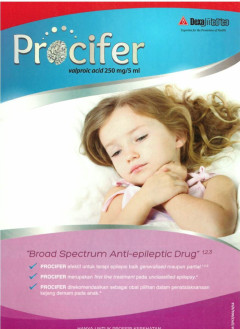
Updated ILAE evidence review of antiepileptic drug efficacy and effectiveness…
The purpose of this report was to update the 2006 International League Against Epilepsy (ILAE) report and identify the level of evidence for long-term efficacy or effectiveness for antiepileptic drugs (AEDs) as initial monotherapy for patients with newly diagnosed or untreated epilepsy. All applicable articles from July 2005 until March 2012 were identified, evaluated, and combined with th…
- Edition
- -
- ISBN/ISSN
- -
- Collation
- -
- Series Title
- -
- Call Number
- -
The SANAD study of effectiveness of valproate, lamotrigine, or topiramate for…
Valproate is widely accepted as a drug of first choice for patients with generalised onset seizures, and its broad spectrum of efficacy means it is recommended for patients with seizures that are difficult to classify. Lamotrigine and topiramate are also thought to possess broad spectrum activity.
- Edition
- -
- ISBN/ISSN
- -
- Collation
- -
- Series Title
- -
- Call Number
- -
Seizures in Children
Seizures are the most common pediatric neurologic disorder, with 4% to 10% of children suffering at least one seizure in the first 16 years of life [1]. The incidence is highest in children younger than 3 years of age, with a decreasing frequency in older children
- Edition
- -
- ISBN/ISSN
- -
- Collation
- -
- Series Title
- -
- Call Number
- -

Safety and Efficacy of Privigen®, a Novel 10% Liquid Immunoglobulin Preparat…
The present study was designed to evaluate the efficacy and safety of a novel, 10% liquid formulation of intravenous immunoglobulin, stabilized with 250 mmol/L L-proline (Privigen®), in patients with primary immunodeficiency disease
- Edition
- -
- ISBN/ISSN
- -
- Collation
- -
- Series Title
- -
- Call Number
- -
The Mystery of IVIg
An 11-year-old Caucasian female with juvenile dermatomyositis (JDMS) presented to our clinic with a worsening rash and increased proximal muscle weakness. Three years prior to this visit, the patient had been diagnosed with JDMS based on clinical presentation, elevated muscle enzymes, and characteristic findings on muscle biopsy and electromyography. She was successfully managed with chronic …
- Edition
- -
- ISBN/ISSN
- -
- Collation
- -
- Series Title
- -
- Call Number
- -
A 10% liquid immunoglobulin preparation for intravenous use (Privigen®) in p…
The objective of this study was to evaluate safety and efficacy of Privigen®, a 10% intravenous immunoglobulin (IVIG), in a particular group of paediatric patients (highly sensitive to previous IVIG infusion) affected with Primary Immunodeficiencies (PID)
- Edition
- -
- ISBN/ISSN
- -
- Collation
- -
- Series Title
- -
- Call Number
- -
L-Proline reduces IgG dimer content and enhances the stability of intravenous…
Liquid intravenous immunoglobulin (IVIG) products offer improved convenience in preparation but often lack sufficient stability to allow room temperature storage. Furthermore, clinical tolerability may be affected due to formation of idiotype/anti-idiotype IgG dimers and/or aggregates. Here we report on the development of a 10% IVIG formulation with optimized stability achieved by the use of L-…
- Edition
- -
- ISBN/ISSN
- -
- Collation
- -
- Series Title
- -
- Call Number
- -
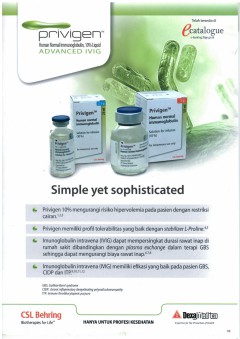
Nationwide study of therapeutic plasma exchange vs intravenous immunoglobulin…
We compared outcomes of therapeutic plasma exchange (TPE) vs intravenous immunoglobulin (IVIG) among hospitalized patients diagnosed with Guillain-Barré syndrome (GBS).
- Edition
- -
- ISBN/ISSN
- -
- Collation
- -
- Series Title
- -
- Call Number
- -
Intravenous immunoglobulin for Guillain-Barré syndrome
Guillain-Barré syndrome (GBS) is an acute, paralysing, inflammatory peripheral nerve disease. Intravenous immunoglobulin (IVIg) is beneficial in other autoimmune diseases. This is an update of a review first published in 2001 and previously updated in 2003, 2005, 2007, 2010 and 2012. Other Cochrane systematic reviews have shown that plasma exchange (PE) significantly hastens recovery in GBS co…
- Edition
- -
- ISBN/ISSN
- -
- Collation
- -
- Series Title
- -
- Call Number
- -
Comparison of efficacy and outcome of intravenous immunoglobulin therapy vers…
Acute inflammatory demyelinating polyneuropathy (AIDP) often described as Guillain-Barre syndrome (GBS) is an ascending neuropathy involving demyelination of peripheral nerves. Very few studies on GBS have been conducted in Indian scenario in recent years. Taking into account this background, we undertook this study to have better outlook to the spectrum of disease and out…
- Edition
- -
- ISBN/ISSN
- -
- Collation
- -
- Series Title
- -
- Call Number
- -
 Computer Science, Information & General Works
  Philosophy & Psychology
  Religion
  Social Sciences
  Language
  Pure Science
  Applied Sciences
  Art & Recreation
  Literature
  History & Geography