Filter by
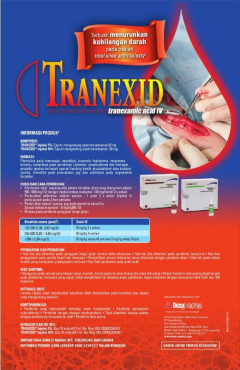
TRANEXAMIC ACID COMPARED WITH HIGH-DOSE APROTININ IN PRIMARY ELECTIVE HEART O…
Since excessive fibrinolysis during cardiac surgery is frequently associated with abnormal perioperative bleeding, many authors have advocated prophylactic use of antifibrinolytic drugs to prevent hemorrhagic disorders. We compared the effects of tranexamic acid (a synthetic antifibrinolytic drug) with aprotinin (a natural derivative product with antifibrinolytic properties) on perioperative bl…
- Edition
- -
- ISBN/ISSN
- -
- Collation
- -
- Series Title
- -
- Call Number
- -
Clinical observation of blood loss reduced by tranexamic acid during and afte…
Tranexamic acid statistically reduces the extent of bleeding from placental delivery to 2 h postpartum and its use was not associated with any side effects or complications. Thus, tranexamic acid can be used safely and effectively to reduce bleeding resulting from CS.
- Edition
- -
- ISBN/ISSN
- -
- Collation
- -
- Series Title
- -
- Call Number
- -
The effect of tranexamic acid on the quality of life of women with heavy mens…
To investigate whether medical treatment with tranexamic acid would increase the quality of life women with heavy menstrual bleeding
- Edition
- -
- ISBN/ISSN
- -
- Collation
- -
- Series Title
- -
- Call Number
- -
Effects of tranexamic acid on postoperative bleeding and related hematochemic…
Bleeding and inflammation are major complications of extracorporeal circulation. Off-pump coronary artery bypass grafting may reduce the rate of complications, but it can only be applied in selected cases. Pilot studies have shown a potential benefit from the use of antifibrinolytic drugs, but efficacy in randomized double-blind studies evaluating off- and on-pump coronary artery bypass graftin…
- Edition
- -
- ISBN/ISSN
- -
- Collation
- -
- Series Title
- -
- Call Number
- -
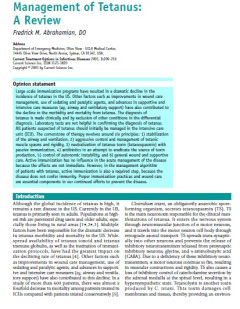
Management of Tetanus: A Review
Large-scale immunization programs have resulted in a dramatic decline in the incidence of tetanus in the US. Other factors such as improvements in wound care management, use of sedating and paralytic agents, and advances in supportiv and intensive care measures (eg, airway and ventilatory support) have also contributed to the decline in the morbidity and mortality from tetanus. The diagnosis …
- Edition
- -
- ISBN/ISSN
- -
- Collation
- -
- Series Title
- -
- Call Number
- -

Tetanus immunisation in geriatric patients with accidental wounds: How much i…
In the industrialised world, the elderly carry the highest risk for tetanus. This prospective serological study was performed to evaluate the reliability of tetanus immunisation histories and the antibody response to tetanus vaccinations in the elderly.
- Edition
- -
- ISBN/ISSN
- -
- Collation
- -
- Series Title
- -
- Call Number
- -
Current recommendation for treatment of tetanus during humanitarian emergencies
The purpose of this technical note is to provide health professionals in United Nations agencies, nongovernmental organizations, donor gencies and local authorities working with populations affected by emergencies with up-to-date technical guidance on the clinical management of tetanus in emergency-affected populations, particularly following natural disasters.
- Edition
- -
- ISBN/ISSN
- -
- Collation
- -
- Series Title
- -
- Call Number
- -
Prevention and Management of wound infection: guidance from WHO's Depart of V…
Open injuries have a potential for serious bacterial wound infections, including gas gangrene and tetanus, and these in turn may lead to long term disabilities, chronic wound or bone infection, and death. Wound infection is particularly of concern when injured patients present late for definitive care, or in disasters where large numbers of injured survivors exceed available trauma care capacit…
- Edition
- -
- ISBN/ISSN
- -
- Collation
- -
- Series Title
- -
- Call Number
- -
Should we test for tetanus immunity in all emergency department patients with…
People who present to the emergency department often do not know their tetanus immunisation status. The Protetanus test can determine whether a person is immune and can guide treatment decisions
- Edition
- -
- ISBN/ISSN
- -
- Collation
- -
- Series Title
- -
- Call Number
- -
Immunity to diphtheria and tetanus in Australia: a national serosurvey
Immunity in children appears to be good, but adults, especially older people, may not be adequately protected. Recent changes to the Australian Standard Vaccination Schedule should improve immunity in cohorts now aged < 50 years. However, additional efforts are required to protect those over 50 years (especially travellers), who are most susceptible.
- Edition
- -
- ISBN/ISSN
- -
- Collation
- -
- Series Title
- -
- Call Number
- -
 Computer Science, Information & General Works
  Philosophy & Psychology
  Religion
  Social Sciences
  Language
  Pure Science
  Applied Sciences
  Art & Recreation
  Literature
  History & Geography