Filter by
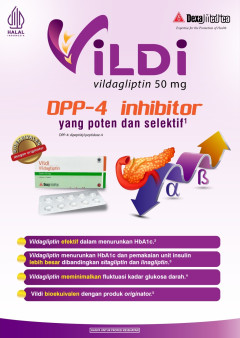
Clinical effectiveness and safety of vildagliptin in >19,000 patients with ty…
The present GUARD study was a prospective, non-interventional study evaluating the clinical effectiveness, safety and tolerability of vildagliptin with or without metformin in adult patients with type 2 diabetes mellitus (T2DM) studied in routine clinical practice. Patients were enrolled from countries across four geographical regions. The primary endpoint was change in glycated haemoglobin (Hb…
- Edition
- -
- ISBN/ISSN
- -
- Collation
- -
- Series Title
- -
- Call Number
- -
Comparison of vildagliptin and sitagliptin in patients with type 2 diabetes a…
At their recommended doses for severe RI, vildagliptin (50 mg once daily) compared with sitagliptin (25 mg once daily) demonstrated similar efficacy and both drugs were well tolerated. This study provides further support for the use of DPP-4 inhibitors in patients with severe RI
- Edition
- -
- ISBN/ISSN
- -
- Collation
- -
- Series Title
- -
- Call Number
- -
Efficacy and safety of vildagliptin, sitagliptin, and linagliptin as add-on t…
We aimed to evaluate the efficacy and safety of the three dipeptidyl peptidase 4 (DPP-4) inhibitors (vildagliptin, sitagliptin, and linagliptin) as add-on therapy in Chinese patients with type 2 diabetes mellitus (T2DM) inadequately controlled on dual combination of insulin and metformin or acarbose
- Edition
- -
- ISBN/ISSN
- -
- Collation
- -
- Series Title
- -
- Call Number
- -
Continuous glucose profiles with vildagliptin versus sitagliptin in add-on to…
To compare continuous glucose monitoring (CGM) profiles on vildagliptin versus sitagliptin in addition to metformin, in patients with inadequately controlled type 2 diabetes mellitus (HbA(1c) 6.5-8.0%).
- Edition
- -
- ISBN/ISSN
- -
- Collation
- -
- Series Title
- -
- Call Number
- -
Effects of Vildagliptin, a Dipeptidyl Peptidase-4 Inhibitor, on the Parameter…
DPP-4 inhibitors are frequently used as first-line agents for the treatment of type 2 diabetes in Japan. This study aimed to examine the effects of vildagliptin on glucose metabolism and arterial stiffness. Twenty treatment-naïve patients with type 2 diabetes (8 males and 12 females) received vildagliptin 50 mg twice daily for 6 months. Self-monitored blood glucose measurements and a 75 g OGTT…
- Edition
- -
- ISBN/ISSN
- -
- Collation
- -
- Series Title
- -
- Call Number
- -
Efficacy and Safety of the Utilization of Dipeptidyl Peptidase IV Inhibitors …
To assess the efficacy and safety of Dipeptidyl Peptidase IV (DPP-4) inhibitors in patients with Type-2 Diabetes Mellitus (T2DM) and chronic kidney disease (CKD) using level 1 evidence.
- Edition
- -
- ISBN/ISSN
- -
- Collation
- -
- Series Title
- -
- Call Number
- -
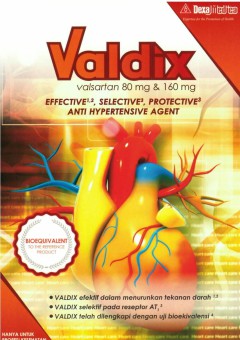
Comparative Efficacy of Valsartan and Olmesartan in Mild-to-Moderate Hyperten…
The aim of this prospective, randomized, open-label, blinded endpoint (PROBE) study was to compare the antihypertensive efficacy of 2 angiotensin II (AII) recep-tor antagonists with different pharmacologic profiles, valsartan and olmesartan, in patients with mild-to-moderate essential hypertension. After an initial 2-week washout period, 114 patients (64 men, 50 women; aged 35–70 years) were …
- Edition
- -
- ISBN/ISSN
- -
- Collation
- -
- Series Title
- -
- Call Number
- -
Comparison of angiotensin II receptor antagonists
- Edition
- -
- ISBN/ISSN
- -
- Collation
- -
- Series Title
- -
- Call Number
- -
- Edition
- -
- ISBN/ISSN
- -
- Collation
- -
- Series Title
- -
- Call Number
- -
Effects of telmisartan 80 mg and valsartan 160 mg on ambulatory blood pressur…
This trial investigated and compared the antihypertensive efficacy of telmisartan and valsartan, two angiotensin II receptor blockers, used in monotherapy at their maximum recommended dose in hypertensive patients.
- Edition
- -
- ISBN/ISSN
- -
- Collation
- -
- Series Title
- -
- Call Number
- -

Clopidogrel : A Review of its Use in the Prevention of Thrombosis
Clopidogrel (Plavix®, Iscover®) selectively and irreversibly inhibits adenosine diphosphate (ADP)-induced platelet aggregation. Long-term administration of clopidogrel was associated with a modest but statistically significant advantage over aspirin in reducing adverse cardiovascular outcomes in patients with established cardiovascular disease in the CAPRIE trial. In other large well designed…
- Edition
- -
- ISBN/ISSN
- -
- Collation
- -
- Series Title
- -
- Call Number
- -
 Computer Science, Information & General Works
  Philosophy & Psychology
  Religion
  Social Sciences
  Language
  Pure Science
  Applied Sciences
  Art & Recreation
  Literature
  History & Geography