Filter by
Diagnosis and Management of Rheumatoid Arthritis : A Review
Rheumatoid arthritis (RA) occurs in about 5 per 1000 people and can lead to severe joint damage and disability. Significant progress has been made over the past 2 decades regarding understanding of disease pathophysiology, optimal outcome measures, and effective treatment strategies, including the recognition of the importance of diagnosing and treating RA early.
- Edition
- -
- ISBN/ISSN
- -
- Collation
- -
- Series Title
- -
- Call Number
- -
Immunotherapy in Lung Cancer
Lung cancer is the leading cause of cancer-related mortality in the United States.1 Non–small cell lung cancer (NSCLC) comprises approximately 85% of all lung cancer cases.2 Among patients with NSCLC, approximately 40% present with stage IV disease. 3 Although targeted therapy has been associated with a significant benefit in patients harboring aberrations in epidermal growth factor receptor…
- Edition
- -
- ISBN/ISSN
- -
- Collation
- -
- Series Title
- -
- Call Number
- -
Paraneoplastic Syndromes: An Approach to Diagnosis and Treatment
Recent medical advances have improved the understanding, diagnosis, and treatment of paraneoplastic syndromes. These disorders arise from tumor secretion of hormones, peptides, or cytokines or from immune cross-reactivity between malignant and normal tissues. Paraneoplastic syndromes may affect diverse organ systems, most notably the endocrine, neurologic, dermatologic, rheumatologic, and hemat…
- Edition
- -
- ISBN/ISSN
- -
- Collation
- -
- Series Title
- -
- Call Number
- -
Assessment of Quality of Life (QoL) in Systemic Lupus Erythematosus Patients …
One hundred sixty-four SLE patients were recruited for this study. Demographic information; clinical parameters; disease activity, as evaluated by the Systemic Lupus Erythematosus Disease Activity Index; and organ damage, as assessed by the Systemic Lupus International Collaborative Clinics/American College of Rheumatology Damage Index, were reported. Quality of life was assessed with a qualit…
- Edition
- -
- ISBN/ISSN
- -
- Collation
- -
- Series Title
- -
- Call Number
- -
Systemic Lupus Erythematosus : Epidemiology, Pathophysiology, Manifestations,…
Systemic lupus erythematosus (SLE) is a chronic autoimmune disorder, characterized by production of autoantibodies directed against nuclear and cytoplasmic antigens, which may affect several different organs, with a plethora of different clinical and immunologic abnormalities, characterized by a relapsing and remitting clinical course
- Edition
- -
- ISBN/ISSN
- -
- Collation
- -
- Series Title
- -
- Call Number
- -

Zinc and immune function: the biological basis of altered resistance to infec…
Zinc is known to play a central role in the immune system, and zinc-deficient persons experience increased susceptibility to a variety of pathogens. The immunologic mechanisms whereby zinc modulates increased susceptibility to infection have been studied for several decades. It is clear that zinc affects multiple aspects of the immune system, from the barrier of the skin to gene regulation with…
- Edition
- -
- ISBN/ISSN
- -
- Collation
- -
- Series Title
- -
- Call Number
- -
The effect of N-acetylcysteine on exacerbations of chronic obstructive pulmon…
N-acetylcysteine (NAC) is an antioxidant and anti-inflammatory. Its effects on chronic obstructive pulmonary (COPD) outcomes, including exacerbation of and changes in lung function parameters, are controversial. To investigate the effects of NAC on COPD exacerbation and changes in lung function parameters in patients with COPD. A meta-analysis of randomized controlled trials retrieved from Pub…
- Edition
- -
- ISBN/ISSN
- -
- Collation
- -
- Series Title
- -
- Call Number
- -
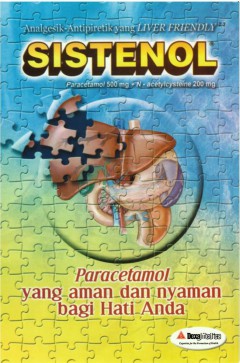
Efek proteksi kombinasi parasetamol dan N-Asetilsistein terhadap kerusakan se…
- Edition
- -
- ISBN/ISSN
- -
- Collation
- -
- Series Title
- -
- Call Number
- -
- Edition
- -
- ISBN/ISSN
- -
- Collation
- -
- Series Title
- -
- Call Number
- -
Accidental paracetamol poisoning
A 45-year-old woman was referred to the Victorian Liver Transplant Unit with acute liver failure following the use of paracetamol at a therapeutic dose during prolonged fasting. Eight weeks previously, the patient had ndergone total abdominal hysterectomy for symptomatic uterine fibroids. Seven weeks after surgery, she was readmitted to hospital with subacute bowel obstruction secondary to adh…
- Edition
- -
- ISBN/ISSN
- -
- Collation
- -
- Series Title
- -
- Call Number
- -
Cyclophosphamide versus methylprednisolone for treating neuropsychiatric invo…
Neuropsychiatric involvement in systemic lupus erythematosus (SLE) is complex and it is an important cause ofmorbidity andmortality. Management of nervous system manifestations of SLE remains unsatisfactory. This is an update of a Cochrane review first published in 2000 and previously updated in 2006
- Edition
- -
- ISBN/ISSN
- -
- Collation
- -
- Series Title
- -
- Call Number
- -
 Computer Science, Information & General Works
  Philosophy & Psychology
  Religion
  Social Sciences
  Language
  Pure Science
  Applied Sciences
  Art & Recreation
  Literature
  History & Geography