Filter by
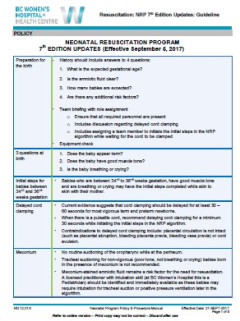
NEONATAL RESUSCITATION PROGRAM 7th EDITION UPDATES
- Edition
- -
- ISBN/ISSN
- -
- Collation
- -
- Series Title
- -
- Call Number
- -
- Edition
- -
- ISBN/ISSN
- -
- Collation
- -
- Series Title
- -
- Call Number
- -
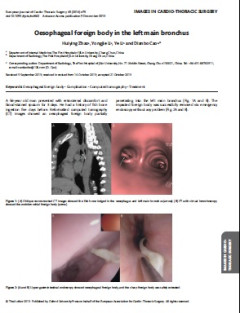
Oesophageal foreign body in the left main bronchus
- Edition
- -
- ISBN/ISSN
- -
- Collation
- -
- Series Title
- -
- Call Number
- -
- Edition
- -
- ISBN/ISSN
- -
- Collation
- -
- Series Title
- -
- Call Number
- -
Foreign body in the bronchus in children: 22 years experience in a tertiary c…
Our objective was to assess types, presentation, duration of symptoms and usefulness of rigid bronchoscopy for diagnosis and treatment of bronchial foreign body (FB) in children
- Edition
- -
- ISBN/ISSN
- -
- Collation
- -
- Series Title
- -
- Call Number
- -
THE CONCEPTUAL AND CLINICAL PROBLEMS OF PARANEOPLASTIC SYNDROME IN ONCOLOGY A…
Symptomatology of oncological diseases consists not only of local symptoms caused by the primary malignancy or its metastases, but also by general systemic signs that are not directly connected with the tumor. These symptoms are mostly associated with autoimmunity or endocrine influences. In many cases, the source of paraneoplastic syndromes (PNS) is unknown. Nearly 15% of oncological patients …
- Edition
- -
- ISBN/ISSN
- -
- Collation
- -
- Series Title
- -
- Call Number
- -
Pre-Eclampsia and Eclampsia: An Update on the Pharmacological Treatment Appli…
Pre-eclampsia and eclampsia are two hypertensive disorders of pregnancy, considered major causes of maternal and perinatal death worldwide. Pre-eclampsia is a multisystemic disease characterized by the development of hypertension after 20 weeks of gestation, with the presence of proteinuria or, in its absence, of signs or symptoms indicative of target organ injury. Eclampsia represents the con…
- Edition
- -
- ISBN/ISSN
- -
- Collation
- -
- Series Title
- -
- Call Number
- -
Preeclampsia and cardiovascular disease: interconnected paths that enable det…
The potent and now longstanding evidence of the association between placentationrelated disorders and cardiovascular disease should be translated into clinical practice in order to introduce a preventive approach to future obstetric and cardiovascular diseases. The purpose of this review is to integrate cardiovascular risk/disease and obstetric complications, which are linked by endothelial dy…
- Edition
- -
- ISBN/ISSN
- -
- Collation
- -
- Series Title
- -
- Call Number
- -
Toxoplasmosis in pregnancy
Pregnant women who acquire infection from Toxoplasma gondii usually remain asymptomatic, although they can still transmit the infection to their fetuses with severe consequences. Given the asymptomatic nature of most Toxoplasma infections, primary prevention in pregnant women may lower the risk of congenital toxoplasmosis. Both consumption of undercooked meat and unprotected contact with soil a…
- Edition
- -
- ISBN/ISSN
- -
- Collation
- -
- Series Title
- -
- Call Number
- -
Toxoplasmosis in Pregnancy: Prevention, Screening, and Treatment
One of the major consequences of pregnant women becoming infected by Toxoplasma gondii is vertical transmission to the fetus. Although rare, congenital toxoplasmosis can cause severe neurological or ocular disease (leading to blindness), as well as cardiac and cerebral anomalies. Prenatal care must include education about prevention of toxoplasmosis. The low prevalence of the disease in the Can…
- Edition
- -
- ISBN/ISSN
- -
- Collation
- -
- Series Title
- -
- Call Number
- -
Long-term Effects of Metformin on Diabetes Prevention: Identification of Subg…
We examined the effects of metformin on diabetes prevention and the subgroups that benefited most over 15 years in the Diabetes Prevention Program (DPP) and its follow-up, the Diabetes Prevention Program Outcomes Study (DPPOS).
- Edition
- -
- ISBN/ISSN
- -
- Collation
- -
- Series Title
- -
- Call Number
- -
Angiotensin converting enzyme and angiotensin II type 1-receptor gene polymor…
Polymorphisms in several genes of the renin–angiotensin system have been implicated as risk factors for myocardial infarction and ischaemic heart disease. In particular, it has been suggested that the angiotensin converting enzyme insertion / deletion 1166 (I /D) polymorphism and the angiotensin II type 1 receptor A C polymorphisms might act synergistically to increase the risk of myocardi…
- Edition
- -
- ISBN/ISSN
- -
- Collation
- -
- Series Title
- -
- Call Number
- -
 Computer Science, Information & General Works
  Philosophy & Psychology
  Religion
  Social Sciences
  Language
  Pure Science
  Applied Sciences
  Art & Recreation
  Literature
  History & Geography