Filter by
The diagnosis of pulmonary tuberculosis: a Korean perspective
Despite global efforts to eliminate tuberculosis, the disease remains of huge global public health problem. Prompt and accurate diagnosis of pulmonary tuberculosis is essential to ensure appropriate therapy. Chest radiography, sputum smear microscopy, mycobacterial culture, and nucleic acid amplification test are essential diagnostic elements, and appropriate use of recently introduced molecula…
- Edition
- -
- ISBN/ISSN
- -
- Collation
- -
- Series Title
- -
- Call Number
- -
The Pathogenesis of Tuberculosis: The Early Infiltrate of Post-primary (Adult…
It has long been recognized that tuberculosis (TB) induces both protective and tissue damaging immune responses. This paper reviews nearly two centuries of evidence that protection and tissue damage are mediated by separate disease entities in humans. Primary TB mediates protective immunity to disseminated infection while post-primary TB causes tissue damage that results in formation of caviti…
- Edition
- -
- ISBN/ISSN
- -
- Collation
- -
- Series Title
- -
- Call Number
- -
Treatment delay and fatal outcomes of pulmonary tuberculosis in advanced age:…
Studies focusing on pulmonary tuberculosis in advanced age (≥80 years) are lacking. This study aimed to explore treatment delay, outcomes and their predictors in this group
- Edition
- -
- ISBN/ISSN
- -
- Collation
- -
- Series Title
- -
- Call Number
- -
Newer antibiotics for the treatment of peritoneal dialysis-related peritonitis
Peritonitis is a debilitating infectious complication of peritoneal dialysis (PD). Drug-resistant bacterial peritonitis typically has a lower response rate to antibiotics. In the past 15 years, newer antibiotics with activities against drug-resistant Gram-positive bacteria have been developed. In most circumstances, peritonitis due to methicillin-resistant staphylococci responds to vancomyci…
- Edition
- -
- ISBN/ISSN
- -
- Collation
- -
- Series Title
- -
- Call Number
- -
Risk of Spontaneous Bacterial Peritonitis Associated With Gastric Acid Suppre…
The primary objective of this study was to determine the association between the use of gastric acid suppressants (GAS) and the risk of developing spontaneous bacterial peritonitis (SBP) in patients with advanced liver cirrhosis (LC).
- Edition
- -
- ISBN/ISSN
- -
- Collation
- -
- Series Title
- -
- Call Number
- -
Therapeutic management of peritonitis: a comprehensive guide for intensivists
The management of peritonitis in critically ill patients is becoming increasingly complex due to their changing characteristics and the growing prevalence of multidrug-resistant (MDR) bacteria
- Edition
- -
- ISBN/ISSN
- -
- Collation
- -
- Series Title
- -
- Call Number
- -
Pedoman Tatalaksana Covid-19
Pada tanggal 31 Desember 2019, Tiongkok melaporkan kasus pneumonia misterius yang tidak diketahui penyebabnya. Dalam 3 hari, pasien dengan kasus tersebut berjumlah 44 pasien dan terus bertambah hingga saat ini berjumlah jutaan kasus. Pada awalnya data epidemiologi menunjukkan 66% pasien berkaitan atau terpajan dengan satu pasar seafood atau live market di Wuhan, Provinsi Hubei Tiongkok. Sampel…
- Edition
- -
- ISBN/ISSN
- -
- Collation
- -
- Series Title
- -
- Call Number
- -
NICE guideline on long COVID
As the global COVID-19 pandemic has progressed, evidence has emerged that some patients are experiencing prolonged multiorgan symptoms and complications beyond the initial period of acute infection and illness. The list of persisting and new symptoms reported by patients is extensive, including chronic cough, shortness of breath, chest tightness, cognitive dysfunction, and extreme fatigue
- Edition
- -
- ISBN/ISSN
- -
- Collation
- -
- Series Title
- -
- Call Number
- -
What we know about Long-term effects of COVID-19: THE LATEST ON THE COVID-19 …
This study showed there was persistent and significant impairment of exercise capacity and health status in survivors of SARS over 24 months. Health workers who had SARS experienced even more marked adverse impact
- Edition
- -
- ISBN/ISSN
- -
- Collation
- -
- Series Title
- -
- Call Number
- -
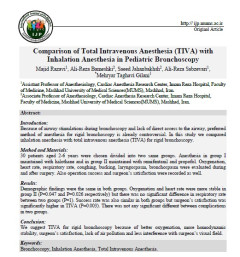
Comparison of Total Intravenous Anesthesia (TIVA) with Inhalation Anesthesia …
Because of airway stimulations during bronchoscopy and lack of direct access to the airway, preferred method of anesthesia for rigid bronchoscopy is already controversial. In this study we compared inhalation anesthesia with total intravenous anesthesia (TIVA) for rigid bronchoscopy
- Edition
- -
- ISBN/ISSN
- -
- Collation
- -
- Series Title
- -
- Call Number
- -
 Computer Science, Information & General Works
  Philosophy & Psychology
  Religion
  Social Sciences
  Language
  Pure Science
  Applied Sciences
  Art & Recreation
  Literature
  History & Geography